

04 Aug Who Pays Medical Bills for Uninsured Fort Lauderdale Crash Victims?
Facing Medical Bills After a Crash With No Insurance in Fort Lauderdale
Key Takeaways: If you are uninsured and hurt in a Fort Lauderdale crash you did not cause, your PIP benefits are unavailable, so payment shifts to other sources. Primary targets include the at-fault driver’s Bodily Injury Liability coverage and personal assets. Additional payers may include the vehicle owner’s liability when a car was loaned, a resident relative’s PIP, health insurance, or medical liens that defer payment until your claim resolves. Even if the at-fault driver is uninsured, you can pursue a civil judgment and enforce a lien against their titled vehicle. Being uninsured does not bar a negligence claim, but you must prove the other driver’s fault, and Florida’s comparative fault rule can reduce or eliminate recovery. A two-year filing deadline applies, so acting quickly is essential.
When you are hurt in a wreck with no coverage of your own, who pays your medical bills depends on fault, available policies, and Florida statutes. An uninsured driver, passenger, or pedestrian in Fort Lauderdale generally cannot tap Personal Injury Protection benefits, so the burden shifts to the at-fault driver’s liability coverage, the vehicle owner’s exposure, medical liens, or a personal injury lawsuit. Understanding your options early can protect your health and your claim. This guide explains how a car accident no insurance not at fault Florida situation typically unfolds and where compensation may come from.
If you are facing mounting medical costs after a collision, you do not have to navigate Florida’s insurance maze alone. The team at HL Law Group, P.A. offers free consultations to injured people across Broward County. Call us at (954) 713-1212 or reach out through our secure contact page to discuss your options today.
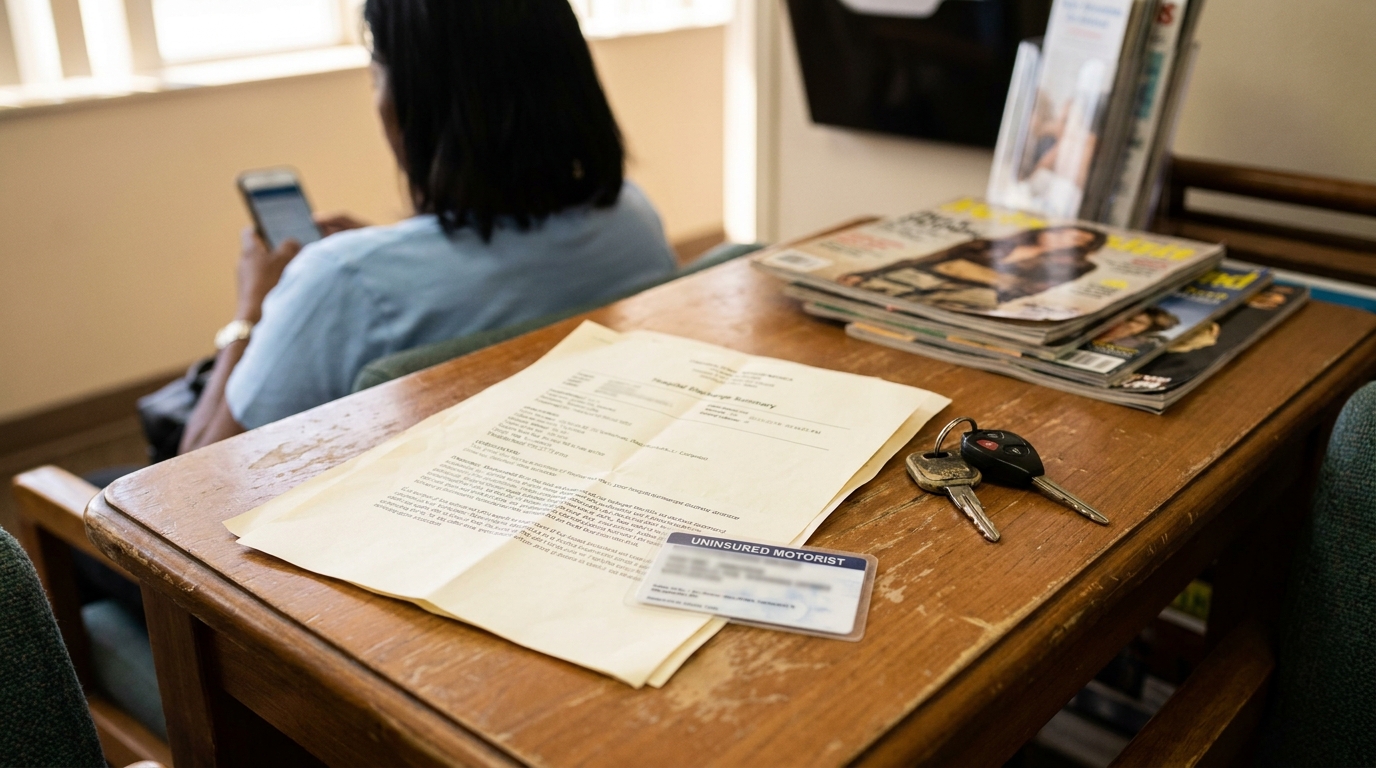
How Florida’s No-Fault System Leaves Uninsured Victims Exposed
Florida is a no-fault state, which means your own auto insurer normally pays your initial medical bills regardless of who caused the crash. Florida law requires registered vehicle owners to carry Personal Injury Protection, and under Fla. Stat. § 627.7407, PIP pays covered medical expenses for the policyholder, passengers, and household relatives. Failure to maintain coverage can result in suspension of the driver license and vehicle registration.
The catch for an uninsured crash victim is that this first-party safety net does not exist. Under Fla. Stat. § 627.736, a compliant PIP policy provides up to $10,000 in medical and disability benefits and $5,000 in death benefits per person per accident, covering 80% of reasonable expenses. Without any policy, you lose access to that first-party medical benefit and must look elsewhere.
Florida legally mandates only PIP and Property Damage Liability for four-wheel vehicle registration, each with a $10,000 minimum. According to the Florida Department of Highway Safety and Motor Vehicles, vehicles must show proof of these minimums before registration, which you can review on the state’s auto insurance requirements page. Bodily Injury Liability, which pays for injury or death to others, is not part of Florida’s required minimum coverage, leaving victims to rely on the at-fault party’s assets or other sources.
💡 Pro Tip: Even if you were uninsured, seek medical evaluation immediately after a Fort Lauderdale crash. Contemporaneous medical records are among the strongest evidence linking your injuries to the collision, and gaps in treatment can be used to dispute your claim later.
Car Accident No Insurance Not At Fault Florida: Who Actually Pays
When you did not cause the wreck, the primary target for your medical bills is the at-fault driver’s liability insurance and personal assets. Because uninsured motorist coverage supplements rather than duplicates PIP, and because Fla. Stat. § 627.727 requires insurers to offer UM coverage only to their own policyholders, an uninsured victim cannot access UM benefits even when the other driver has none. This underscores why identifying every available payer matters.
Recovering as an uninsured party is legally permissible, but requires proving the other driver’s negligence. Being uninsured does not bar a negligence claim in Florida. To understand pursuing compensation without your own policy, review our explanation of whether you can file a claim without insurance in Florida.
Sources That May Cover Your Medical Bills
Uninsured victims often piece together compensation from multiple sources. Depending on the facts, potential payers include:
- The at-fault driver’s Bodily Injury Liability policy, if they carried one
- The at-fault driver’s personal assets through a civil judgment
- The vehicle owner’s liability, when someone else loaned the car
- Health insurance, medical liens, or letters of protection to defer payment
- PIP through a resident relative’s policy, if you qualified as a covered person
💡 Pro Tip: Ask the responding officer whether the at-fault driver carried Bodily Injury Liability coverage, and photograph their insurance card if possible. Confirming coverage early helps your Fort Lauderdale car accident attorney map out the fastest path to payment.
Paying Medical Bills Through Liens and Letters of Protection
When no immediate insurance is available, medical liens and letters of protection can keep you in treatment while your claim proceeds. A letter of protection is a written promise to pay a treating provider from the proceeds of your eventual settlement or judgment, allowing care to continue without upfront payment. These tools are common in medical bills after car accident Fort Lauderdale cases where the victim has no PIP and limited health coverage.
Medical liens attach a provider’s right to payment directly to your recovery. This arrangement can be a lifeline, but means a portion of any settlement will be repaid to lienholders. A knowledgeable Broward County personal injury lawyer can often negotiate lien amounts down, increasing what ultimately reaches you.
💡 Pro Tip: Keep every bill, explanation of benefits, and lien notice in one folder. Organized documentation makes it easier to verify charges, dispute inflated amounts, and calculate the full value of your Fort Lauderdale injury claim.
Holding the At-Fault Driver and Vehicle Owner Accountable
Florida law sometimes lets you recover from the vehicle’s owner even when that person was not driving. Under Fla. Stat. § 324.021(9)(b), a natural person who loans a vehicle to an uninsured permissive user may be liable for bodily injury damages up to $100,000 per person and $300,000 per incident, plus up to an additional $500,000 in economic damages if the driver was uninsured or carried less than $500,000 in combined coverage. Short-term vehicle lessors face similar exposure, creating recovery pathways beyond the driver alone.
Enforcing a Judgment Against an Uninsured Driver
If you win a judgment against an at-fault driver who also lacks insurance, you may enforce it against their assets. Under Fla. Stat. § 55.205, a judgment lien acquired on personal property, including a motor vehicle with a Florida certificate of title, is valid and enforceable against the judgment debtor. The lienholder may obtain a court order directing the Department of Highway Safety and Motor Vehicles to note the lien on the title.
Administrative penalties against the uninsured driver are separate from your civil case. The state may suspend a non-compliant driver’s license and registration, but that administrative process does not pay your medical bills. Your compensation flows through the civil claim, which is why proving liability through police reports, witness statements, and medical records remains essential.
| Potential Payer | Governing Authority | Typical Limit |
|---|---|---|
| Your own PIP | Fla. Stat. § 627.736 | $10,000 (unavailable if uninsured) |
| At-fault driver BIL | Not state-mandated | Policy dependent |
| Vehicle owner (loaned car) | Fla. Stat. § 324.021(9)(b) | $100,000 / $300,000 + $500,000 economic |
| Judgment lien on vehicle | Fla. Stat. § 55.205 | Value of debtor assets |
Deadlines and Fault Rules That Can Make or Break Your Claim
Timing is critical, because Florida generally requires a negligence lawsuit to be filed within two years of the crash date. Under Fla. Stat. § 95.11(4)(a), missing this civil statute of limitations can permanently bar recovery, regardless of how clear the other driver’s fault was. This two-year deadline applies to negligence claims accruing on or after March 24, 2023.
Florida’s comparative fault rule can also reduce or eliminate what you recover. Under Fla. Stat. § 768.81, a party found more than 50% at fault for their own harm may not recover any damages, and you can read the full framework in Florida’s comparative negligence statute. If you are 50% or less at fault, you may still recover damages reduced by your percentage of fault, making strong liability evidence especially valuable for uninsured victims.
💡 Pro Tip: Do not admit fault at the scene or in recorded statements to any insurer. Casual apologies can be twisted into comparative-fault arguments that shrink your recovery, so let your legal team communicate on your behalf.
Frequently Asked Questions
-
Can I recover medical costs if I had no insurance but did not cause the crash?
Yes, being uninsured does not bar a negligence claim in Florida. You may pursue the at-fault driver’s liability coverage, the vehicle owner’s exposure, or a civil judgment, though you lose access to PIP and UM benefits.
-
How long do I have to file a lawsuit after a Fort Lauderdale crash?
Florida generally allows two years from the accident date to file a negligence action under Fla. Stat. § 95.11(4)(a) for claims accruing on or after March 24, 2023. Acting promptly protects your right to compensation.
-
Will being partly at fault stop me from recovering?
Not necessarily. Under Florida’s modified comparative fault standard, being 50% or less at fault reduces your recovery proportionally, while being more than 50% at fault bars recovery entirely.
-
What if the at-fault driver is also uninsured?
You may still sue and pursue a judgment against their personal assets. A judgment lien on their titled vehicle under Fla. Stat. § 55.205 can be an enforcement tool.
-
Can I keep getting treatment without money upfront?
In many cases, yes, through medical liens or letters of protection. These arrangements defer payment until your claim resolves, subject to repayment from your recovery.
Protecting Your Recovery After an Uninsured Fort Lauderdale Crash
Being an uninsured crash victim in Florida narrows your options, but it does not close the door on compensation. Between the at-fault driver’s liability coverage, vehicle-owner exposure under Fla. Stat. § 324.021, enforceable judgment liens, and treatment tools like letters of protection, several pathways may cover your medical bills. Because Florida’s two-year deadline and comparative fault rules can quietly erode a claim, moving quickly and preserving evidence is often the difference between full recovery and none. For a deeper overview, explore our team’s approach to car accidents Fort Lauderdale clients trust.
You deserve a clear plan and a dedicated advocate while you focus on healing. Contact HL Law Group, P.A. for a free case evaluation, call (954) 713-1212, or send us your details through our online consultation request so our Broward County team can start building your path to recovery today.
Sorry, the comment form is closed at this time.