
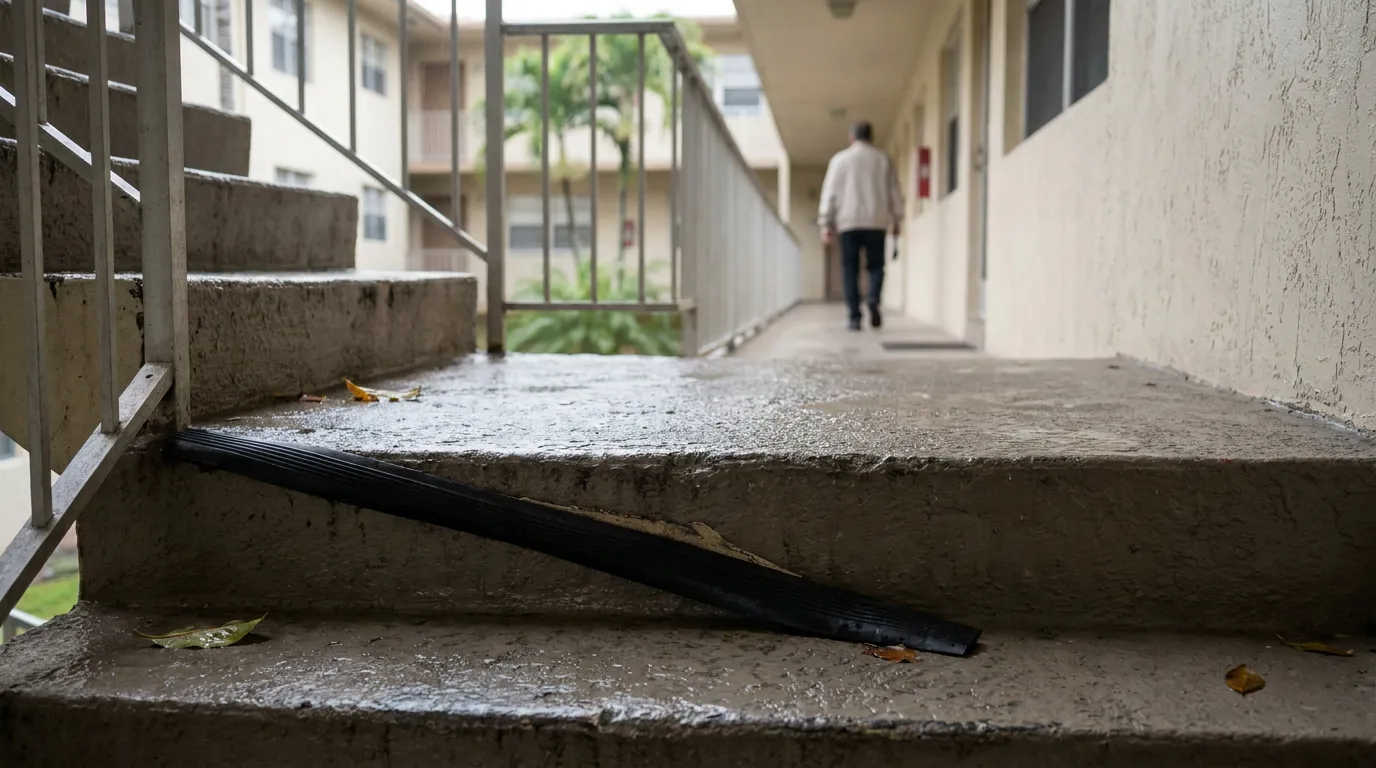
28 Jul Who Is Liable for a Slip and Fall in a Fort Lauderdale Apartment Complex?
Understanding Your Rights After an Apartment Fall in South Florida
Key Takeaways: Liability for a Fort Lauderdale apartment fall can rest with the property owner, management company, maintenance contractor, or a combination of these parties, depending on who controlled the area and created or failed to fix the hazard. Florida law under Chapter 83 requires landlords to maintain common areas and comply with building codes. Winning a claim requires proving the responsible party had actual or constructive notice of the danger under Fla. Stat. § 768.0755 and Florida common law. Florida’s several liability rule makes identifying every at-fault party essential. Under modified comparative negligence, being partly at fault reduces your award proportionally, but recovery is barred only if you are more than 50 percent responsible. Injured tenants generally have two years to file, so preserving evidence and meeting deadlines is critical.
If you were hurt in a Fort Lauderdale apartment fall, liability can rest with the property owner, management company, maintenance contractor, or a combination of these parties. Florida law places clear safety duties on landlords, but proving fault requires connecting the dangerous condition to the responsible party and showing they knew or should have known about it. Because multiple entities often control apartment complexes, identifying every liable party is crucial to full compensation.
Time and evidence work against injured tenants, so acting quickly matters. If you suffered a Fort Lauderdale fall injury, HL Law Group, P.A. is ready to evaluate your case. Call us at (954) 713-1212 or request a free consultation to protect your rights.
Who Can Be Held Responsible When You Fall
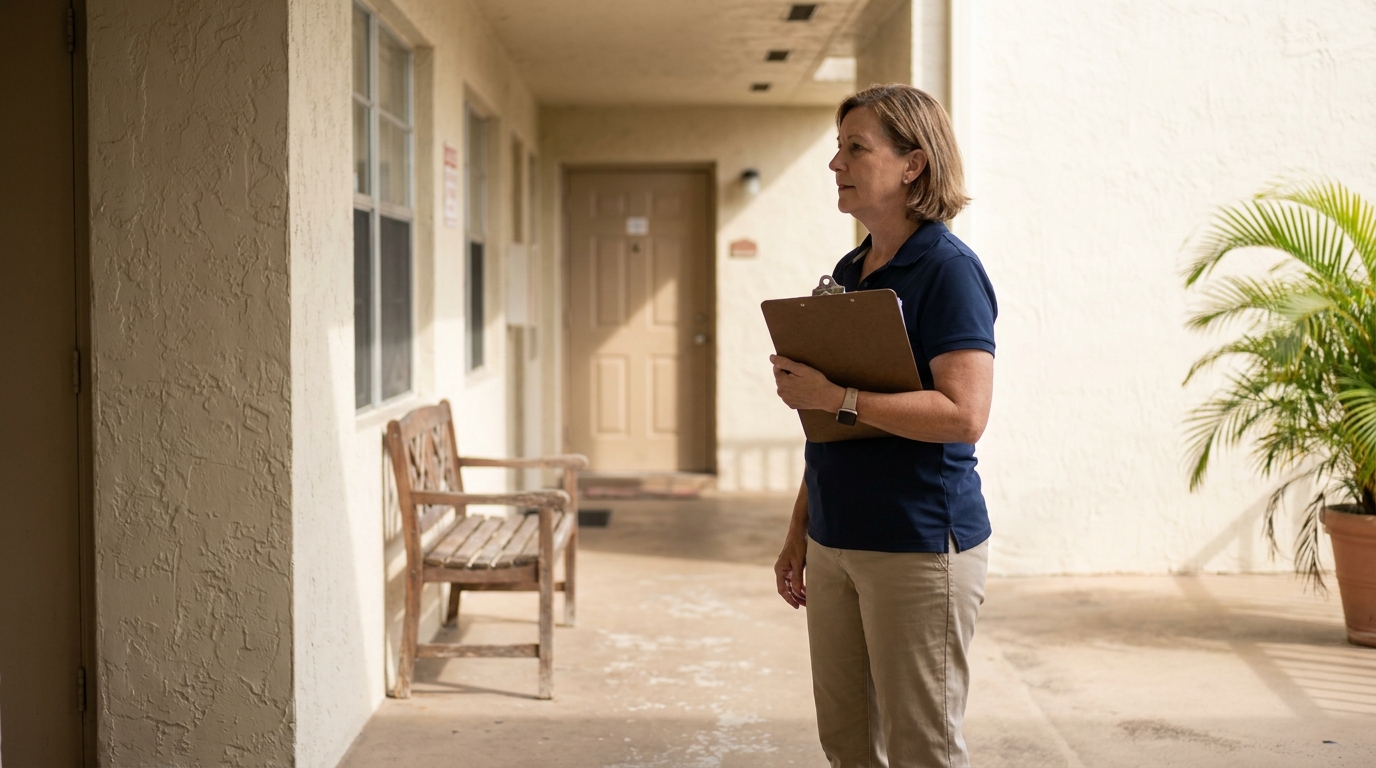
Responsibility for a fall at a Fort Lauderdale apartment depends on who controlled the area and who allowed the hazard to exist. Common areas like stairwells, walkways, parking lots, and lobbies are typically the landlord’s responsibility, while contractors might be at fault for poorly repaired steps or fixtures.
The Landlord’s Duty to Maintain Safe Premises
Florida imposes a direct legal duty on apartment landlords to maintain safe premises. Under Fla. Stat. § 83.51(1) and (2)(a)(3), landlords of dwelling units other than single-family homes or duplexes must comply with building, housing, and health codes, maintain structural components like floors, steps, and porches in good repair, and ensure common areas are clean and safe. Review these obligations in Florida’s landlord-tenant statutes.
Beyond negligence, injured tenants may have a statutory remedy. Under Fla. Stat. § 83.55, if the landlord fails to comply with the rental agreement or landlord-tenant law, the aggrieved party may recover damages. Pairing negligence with this statutory remedy can strengthen your claim.
💡 Pro Tip: Take dated photos of the hazard, your injuries, and the surrounding area before the landlord repairs it. Repairs made after a fall can quietly erase the very evidence you need.
When Property Managers and Contractors Share Blame
Multiple parties often share responsibility for a single fall. Under Fla. Stat. § 768.81(3), in negligence actions courts generally enter judgment against each party based on its own percentage of fault rather than under joint and several liability. This means each party pays only their share.
This apportionment rule makes thorough investigation essential. Because Florida uses several liability, leaving out a partially responsible party can reduce what you collect. Review maintenance records, work orders, and management contracts to assign fault properly.
Proving Notice in a Slip and Fall Lawsuit Fort Lauderdale Residents Should Understand
The most decisive issue in premises liability cases is whether the responsible party knew or should have known about the danger. Under Fla. Stat. § 768.0755, slip victims in business establishments must prove the establishment had actual or constructive knowledge of the dangerous condition. Constructive knowledge may be shown through evidence the condition existed long enough that a reasonable owner should have discovered it, or that it occurred with regularity. For residential apartments, Florida common law imposes a comparable notice requirement.
This notice requirement shapes how slip and fall lawsuits must be built. A puddle that sat for hours, or a recurring leak, can support constructive notice. Our discussion of constructive notice in a Fort Lauderdale slip and fall case breaks down how courts evaluate this evidence.
💡 Pro Tip: Ask whether the complex uses surveillance cameras and request that the footage be preserved in writing right away. Many systems automatically overwrite recordings within days or weeks.
Evidence that commonly helps prove notice includes:
- Maintenance and inspection logs showing when the area was last checked
- Prior complaints or work orders about the same recurring hazard
- Surveillance footage capturing how long the condition existed
- Incident reports and witness statements from other tenants
How Florida’s Comparative Fault Rules Affect Your Recovery
Florida follows modified comparative negligence, so being partly at fault does not automatically end your claim. Under Fla. Stat. § 768.81(2), contributory fault diminishes the award proportionately but does not bar recovery. If you are found 20 percent responsible, your recovery is reduced by that percentage.
However, there is an important threshold. Under Fla. Stat. § 768.81(6), any party found greater than 50 percent at fault for their own harm may not recover damages. This 50 percent bar reflects amendments effective in March 2023 and applies to current negligence claims under Florida’s negligence chapter.
Insurers frequently argue you share blame. Defense teams may claim you were distracted, wearing improper footwear, or ignored an obvious hazard to increase your percentage of fault. Anticipating and rebutting these arguments protects your compensation.
| Your Percentage of Fault | Effect on Recovery Under § 768.81 |
|---|---|
| 0% | Full recovery of proven damages |
| 1% to 50% | Damages reduced proportionally by your fault |
| More than 50% | No recovery permitted |
💡 Pro Tip: Avoid giving a recorded statement to the apartment complex’s insurer before speaking with an attorney. Casual comments about how the fall happened are often used to inflate your share of fault.
When a Landlord May Not Be Liable
Florida law recognizes situations where landlords are not responsible. Under Fla. Stat. § 83.51(4), landlords are not liable for conditions created by the tenant’s negligent or wrongful act, a family member, or another person on the premises with the tenant’s consent. This makes establishing who created the hazard and who failed to address it important.
These defenses show why fact-specific investigation matters. A spill that a tenant caused inside their unit is treated differently from a recurring leak in a shared stairwell.
Deadlines That Can Make or Break Your Claim
Florida sets a firm time limit for filing negligence lawsuits. Under Fla. Stat. § 95.11, actions founded on negligence that accrue on or after March 24, 2023 generally must be brought within two years, while earlier claims had a four-year period. Missing the deadline typically results in dismissal.
Limited exceptions exist but are interpreted narrowly. To avoid losing your rights, consult a Fort Lauderdale slip and fall lawyer well before the deadline approaches.
Frequently Asked Questions
1. Who is usually liable for a slip and fall in a Fort Lauderdale apartment?
Liability generally falls on whoever controlled the area and allowed the hazard. That may be the landlord for common areas, a property manager, or a maintenance contractor. Under Fla. Stat. § 768.81(3), each responsible party generally pays based on its percentage of fault.
2. What do I have to prove to win my claim?
You must prove duty, breach, notice, causation, and damages. This includes showing the responsible party had actual or constructive knowledge of the dangerous condition and failed to fix it under Fla. Stat. § 768.0755 for business establishments and Florida common law for residential premises.
3. Can I still recover if I was partly at fault?
In many cases, yes. Under Fla. Stat. § 768.81(2) and (6), your damages are reduced by your share of fault, but you are barred from recovery only if you are more than 50 percent responsible.
4. How long do I have to file a lawsuit?
Florida generally allows two years for negligence claims accruing on or after March 2023. Fla. Stat. § 95.11 sets this limit, and exceptions are applied narrowly. Acting promptly protects your deadline and evidence.
5. What should I do right after a fall?
Seek medical care, report the incident in writing, and preserve evidence. Photographs, witness contact information, and written requests to preserve surveillance footage can all strengthen a future claim.
Protecting Your Claim and Your Future
Determining liability for a Fort Lauderdale apartment fall requires connecting the hazard to the responsible party, proving notice, and navigating Florida’s comparative fault and deadline rules. Landlords owe duties under Chapter 83, negligence principles under Chapter 768 govern how fault and damages are apportioned, and the two-year window under Chapter 95 leaves little room for delay. Prompt evidence review gives injured tenants and visitors the strongest foundation for full recovery.
You do not have to face the landlord’s insurance company alone. The dedicated team at HL Law Group, P.A. is trusted by South Florida clients and ready to fight for the compensation you deserve. Call (954) 713-1212 or schedule your free case evaluation today so we can begin protecting your rights.
Sorry, the comment form is closed at this time.