
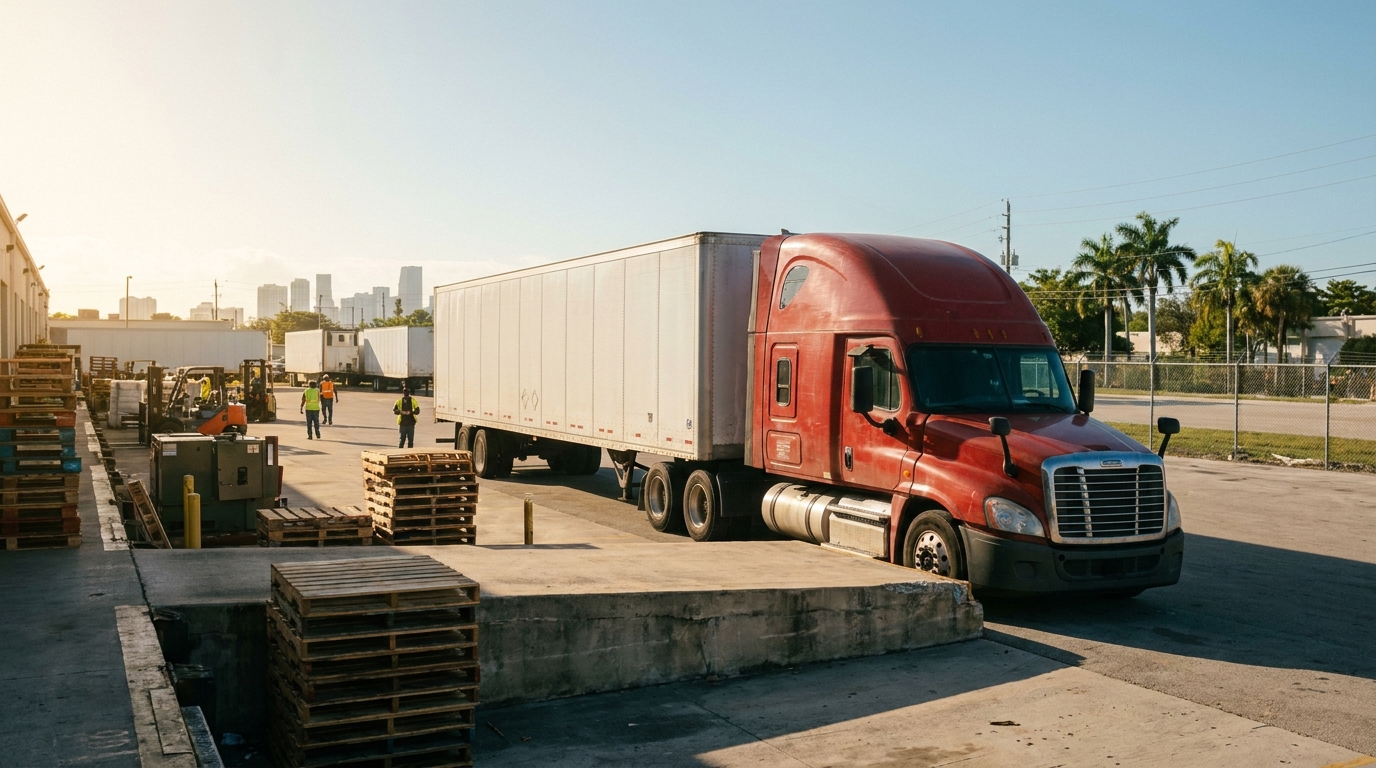
08 Jun Who Can Be Sued After a Commercial Truck Crash in Fort Lauderdale?
Key Takeaways: Commercial truck crashes in Fort Lauderdale often involve multiple liable parties beyond the truck driver. Trucking companies, vehicle manufacturers, cargo loaders, maintenance providers, and government agencies may share responsibility. Florida’s dangerous instrumentality doctrine and respondeat superior can expand the defendants you may pursue. Identifying every at-fault party is critical to maximizing compensation for medical bills, lost wages, and pain and suffering. An experienced truck accident attorney in Broward County can investigate and build a strong multi-defendant claim.
A commercial truck accident in Fort Lauderdale can leave you with catastrophic injuries, mounting medical bills, and complex questions about legal responsibility. Unlike typical car crashes, semi truck crashes may involve multiple companies, contractors, and individuals who each played a role in causing the collision. Multiple parties beyond the truck driver may bear liability, including the trucking company, manufacturer, cargo loader, and maintenance provider. Understanding who can be sued is the first step toward recovering deserved compensation.
If you or a loved one suffered serious injuries in a commercial vehicle accident, do not wait to take action. HL Law Group, P.A. is ready to fight for you. Call (954) 713-1212 or reach out to our team today for a free consultation.
The Truck Driver as the Primary Defendant
The truck driver is generally the first party examined for fault after a collision. Common negligence factors include speeding, fatigued driving, impairment, distracted driving, and failure to check blind spots. The driver is often at fault for a truck accident, but liability rarely stops there.
Proving driver negligence requires strong evidence, including police reports, toxicology results, electronic logging device (ELD) data, and witness testimony. Federal and state regulations impose strict requirements on commercial drivers, and violations can help establish fault. If a driver exceeded federally mandated hours-of-service limits, that regulatory violation may serve as powerful evidence of negligence.
💡 Pro Tip: ELD and black-box data can disappear quickly after a crash. Ask your attorney about sending a spoliation letter to preserve this evidence before the trucking company can alter or destroy it.
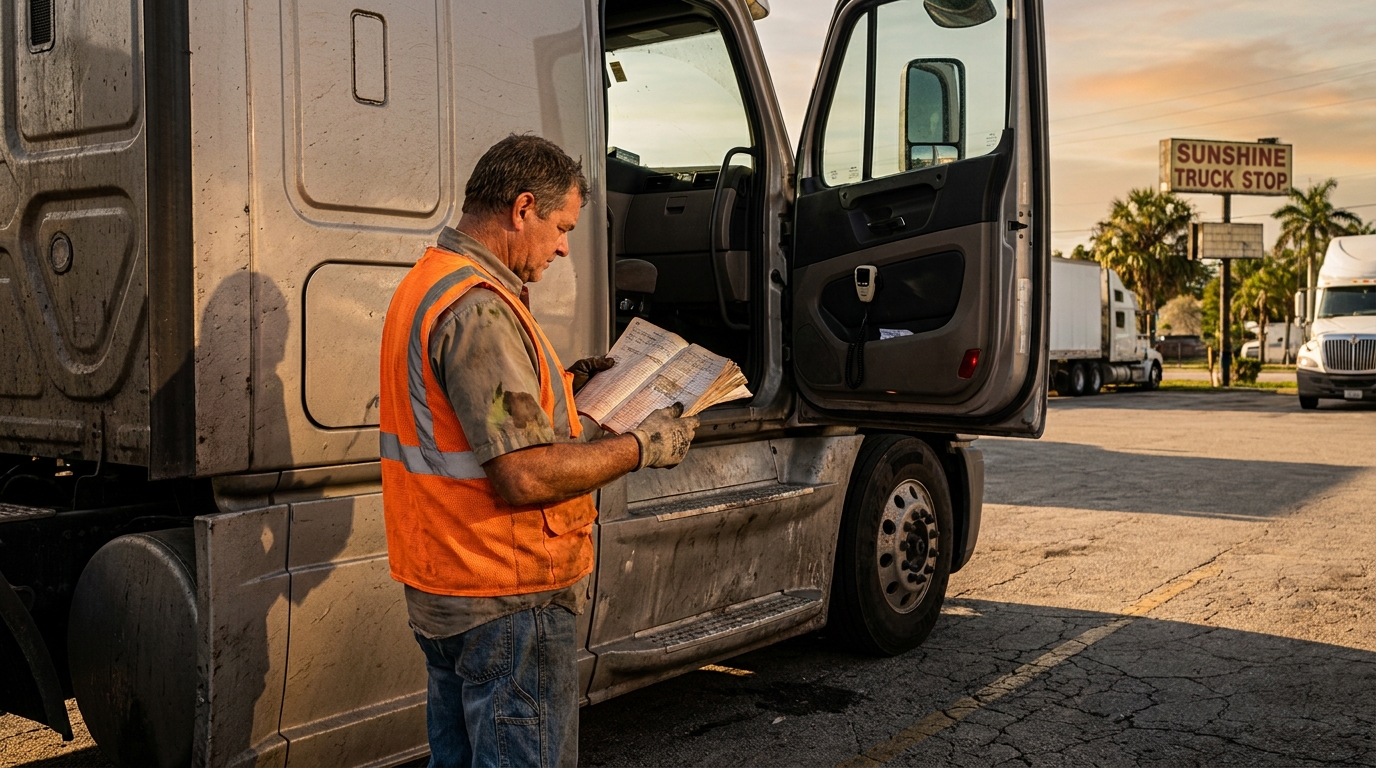
Holding the Trucking Company Accountable for Negligence in Florida
Trucking companies can face both direct and vicarious liability for a crash. Victims may hold companies directly liable for hiring unqualified drivers, failing to maintain fleets, or pressuring drivers to violate safety regulations. Companies can also be held vicariously liable under respondeat superior if the driver was an employee acting within the scope of employment.
Some trucking companies attempt to avoid liability by classifying drivers as independent contractors. However, courts often find misclassification when companies actually control the driver’s schedule, routes, and equipment. If a court determines the driver was functionally an employee, the company remains exposed to liability.
Florida’s Dangerous Instrumentality Doctrine
Florida law provides an additional pathway to hold vehicle owners liable. Under the dangerous instrumentality doctrine, the owner of a commercial vehicle is vicariously liable for injuries caused by its negligent operation, even when someone else was driving with the owner’s consent. This doctrine, established in Southern Cotton Oil Co. v. Anderson, 86 So. 629 (Fla. 1920), is significant in trucking cases where the vehicle owner and driver are different entities.
Negligent Hiring and Respondeat Superior
A motor carrier may face claims for negligent hiring if it failed to properly vet a driver’s qualifications or violation history. However, under Florida case law, a negligent hiring claim generally imposes no greater liability than vicarious liability for the driver’s negligence. See Clooney v. Geeting, 352 So. 2d 1216 (Fla. 2d DCA 1977). Respondeat superior remains the more common theory, allowing plaintiffs to sue employers for driver negligence committed within the scope of employment, including grossly negligent driving.
💡 Pro Tip: Trucking company negligence often surfaces through internal records. Maintenance logs, driver qualification files, and dispatch communications may reveal a pattern of cutting corners on safety.
Truck Manufacturers and Products Liability Claims
When mechanical failure contributes to a crash, the truck manufacturer may be a defendant. Manufacturers can be sued under products liability for manufacturing defects, design defects, or failure to warn of known hazards. In Florida, manufacturers may face strict liability for defective products under Florida Statute §768.81(1)(d), meaning the injured party does not need to prove traditional negligence. However, Florida’s modified comparative fault rules still apply.
Common defect-related failures include brake malfunctions, tire blowouts, steering failures, and defective coupling devices. If a defective part caused or contributed to the accident, both the truck manufacturer and the component manufacturer may be liable. Your Fort Lauderdale truck accident lawyer can work with accident reconstruction professionals to identify whether a product defect played a role.
Third-Party Maintenance Companies and Repair Negligence
Trucking companies frequently outsource vehicle maintenance to third-party repair shops. When a maintenance company fails to perform necessary repairs or performs them incompetently, and that failure contributes to an accident, the maintenance provider can be held liable. Victims must show the maintenance company did not perform required repairs or failed to perform them competently.
These claims require detailed maintenance records, inspection reports, and testimony establishing the standard of care. Learning what evidence Fort Lauderdale truck accident attorneys collect can help you understand why preserving records early is important.
💡 Pro Tip: Maintenance records are often stored digitally and may be overwritten during routine operations. Acting quickly to demand preservation can make or break a claim against a repair provider.
Cargo Loaders and Government Agencies as Additional Defendants
Improper loading of cargo is a frequently overlooked cause of commercial truck accidents. Overloading or failing to properly secure loads can cause vehicles to become unstable, leading to rollovers, jackknife accidents, or debris spills. The company responsible for loading may be a separate entity from the trucking company, creating an additional defendant.
Government agencies may also bear responsibility in certain truck crash cases. If a defectively designed road, missing signage, or poorly maintained highway contributed to the collision, the responsible government entity could be liable. However, claims against government agencies in Florida are subject to sovereign immunity limitations under Florida Statute §768.28, including caps on damages and shorter notice requirements.
| Potential Defendant | Basis of Liability | Key Evidence |
|---|---|---|
| Truck Driver | Negligence (speeding, fatigue, impairment) | ELD data, toxicology, dash cam footage |
| Trucking Company | Direct negligence or vicarious liability | Hiring records, dispatch logs, safety audits |
| Truck Manufacturer | Products liability (defective parts) | Engineering analysis, recall history |
| Maintenance Company | Negligent repairs or inspections | Maintenance logs, repair invoices |
| Cargo Loader | Improper loading or securing of freight | Loading manifests, weight records |
| Government Agency | Defective road design or maintenance | Road inspection reports, prior complaints |
💡 Pro Tip: Florida’s modified comparative fault system reduces your compensation by your percentage of fault, and if you are found more than 50% at fault, you are barred from recovering damages. Building a strong case against every liable party helps offset comparative fault arguments.
Damages You May Recover in a Fort Lauderdale Truck Accident Lawyer Case
Victims of commercial truck crashes in Fort Lauderdale may recover both economic and non-economic damages. Economic damages include medical expenses, lost income, and property damage. Non-economic damages include pain and suffering and emotional distress.
The severity of truck accident injuries often results in significant damage awards. Catastrophic injuries such as spinal cord damage, traumatic brain injuries, and amputations can require lifelong medical care and dramatically reduce earning capacity. Identifying every liable party increases available insurance coverage and assets from which compensation can be recovered.
💡 Pro Tip: Keep a detailed journal documenting your pain levels, emotional state, and daily limitations after the accident to support your non-economic damages claim.
The Role of Federal and State Trucking Regulations
The trucking industry is heavily regulated at both federal and state levels. The Federal Motor Carrier Safety Administration (FMCSA) sets requirements for driver qualifications, hours of service, vehicle maintenance, and cargo securement. Investigation may uncover regulatory violations that help prove fault against the driver, trucking company, or both.
Regulatory violations carry significant weight in litigation. A court may treat violations as evidence of negligence, and in some circumstances violations may give rise to a presumption of negligence. Your attorney can use FMCSA compliance records, inspection reports, and safety ratings to strengthen your claim.
Frequently Asked Questions
1. Can I sue multiple parties after a truck accident in Fort Lauderdale?
Yes. Commercial vehicle accident claims frequently involve multiple defendants. The truck driver, trucking company, manufacturer, cargo loader, and maintenance provider may all share liability. Filing claims against all responsible parties helps maximize recovery.
2. What is vicarious liability in a Florida truck accident case?
Vicarious liability allows you to hold one party responsible for another’s negligent actions. Under respondeat superior, a trucking company can be liable for its employee driver’s negligence within the scope of employment. Florida’s dangerous instrumentality doctrine also holds vehicle owners vicariously liable for injuries caused by negligent operation of their vehicles.
3. How do I prove a trucking company was negligent?
You may prove negligence by showing the company hired unqualified drivers, failed to maintain vehicles, violated federal safety regulations, or pressured drivers to exceed hours-of-service limits. Internal company records, driver qualification files, and maintenance logs are key evidence.
4. Can I sue a government agency if a road defect caused my truck accident?
In certain circumstances, yes. However, claims against government entities in Florida are subject to sovereign immunity limitations under Florida Statute §768.28, including caps on damages and specific pre-suit notice requirements. Consulting an attorney promptly is critical.
5. What damages can I recover after a semi truck crash in Fort Lauderdale?
You may recover economic damages such as medical expenses, lost wages, and property damage, as well as non-economic damages for pain and suffering, emotional distress, and loss of enjoyment of life. Specific damages depend on injury severity and case facts.
Protect Your Rights After a Commercial Truck Crash in Fort Lauderdale
A truck wreck in South Florida can change your life instantly, but you do not have to face the legal battle alone. Identifying every liable party, preserving critical evidence, and building a strong claim against well-funded trucking companies and insurers requires prompt, strategic action. The sooner you involve an attorney, the stronger your position becomes.
HL Law Group, P.A. has a proven track record of fighting for injured victims throughout Fort Lauderdale and Broward County. Call (954) 713-1212 or contact us now for a free case evaluation to learn how we can help you pursue the full compensation you deserve.
Sorry, the comment form is closed at this time.