

07 Oct What Is Biker Bias and How Does It Affect a Fort Lauderdale Claim?
Why Insurers Treat Motorcyclists Differently After a South Florida Crash
Key Takeaways: Biker bias is the unfair presumption that a motorcyclist caused or contributed to a crash simply because they were riding. In Fort Lauderdale it appears as adjuster skepticism, stereotype-driven fault percentages, and lowball offers. Florida’s comparative fault rule under Fla. Stat. § 768.81 reduces damages proportionally to assigned fault and bars recovery when the claimant exceeds 50 percent fault. Riders face exposure because required PIP applies to vehicles with four or more wheels, bodily injury liability coverage is optional, and UM benefits require the certified notice process in Fla. Stat. § 627.727(6)(a). Helmet arguments may be weaker than adjusters imply, since riders over 21 with at least $10,000 in medical benefits may lawfully ride without headgear. Most negligence actions accruing after March 24, 2023 face a two-year filing window under Fla. Stat. § 95.11(5)(a).
Biker bias is the unfair assumption that a motorcyclist caused or contributed to a crash simply because they were on two wheels. It shows up in adjuster notes, recorded statements, and defense arguments, functioning as a quiet discount on your claim. In Fort Lauderdale, where riders share congested corridors like Federal Highway and I-95 with distracted drivers, this prejudice can transform clear liability into a fault dispute. Because Florida assigns damages based on fault shares, an inflated fault number reduces available recovery.
If an adjuster is already hinting that you were speeding, lane-splitting, or "riding recklessly," you need advocacy before that narrative hardens. The team at HL Law Group, P.A. helps injured riders across Broward County push back on stereotype-driven claim devaluation with evidence, reconstruction, and Florida statutory authority. Call (954) 713-1212 or schedule your free consultation to protect your claim value from day one.
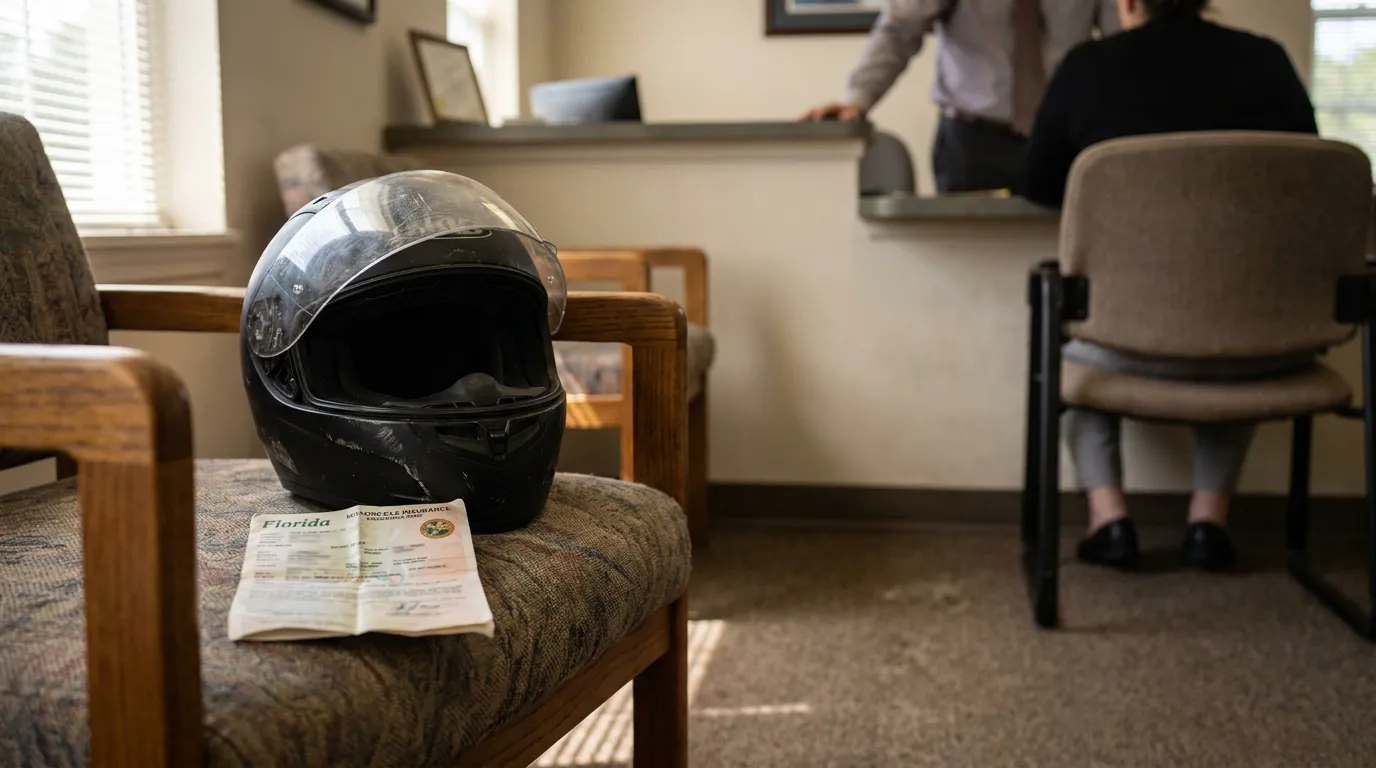
How Biker Bias Actually Enters a Motorcycle Insurance Claim
Insurance adjuster prejudice rarely announces itself in writing. Instead, it appears as skepticism about your version, aggressive questioning about riding history, unusually early requests for recorded statements, and settlement offers that ignore the severity of orthopedic or traumatic brain injuries. Adjusters may lean on motorcycle rider stereotypes involving speed or gear, none of which establish negligence under Florida law.
Common ways bias surfaces include:
- Assigning fault percentages without reconstruction analysis
- Treating the absence of a helmet as evidence of carelessness
- Characterizing lawful acceleration or lane positioning as "reckless"
- Undervaluing future care needs by assuming a rider "accepted the risk"
- Delaying payment to force quick settlements
💡 Pro Tip: Preserve GoPro footage, dashcam files, helmet cam SD cards, and photographs of skid marks and debris fields immediately. Digital evidence is frequently overwritten within days, and objective data can counter assumption-based fault determination in Florida.
The PIP Gap That Makes Riders Especially Vulnerable
Florida’s no-fault system can leave motorcyclists structurally exposed. Mandatory personal injury protection applies to owners of motor vehicles with four or more wheels, and the Florida Bar’s guidance on automobile insurance requirements explains that required PIP coverage generally will not cover you if injured in a motorcycle crash. Insurers may sell optional medical payments coverage for motorcycles, but many riders discover the gap only after the ambulance ride.
That gap matters because recovery hinges on proving another driver’s fault rather than collecting automatic benefits. When every dollar depends on liability, carriers have financial incentive to scrutinize the rider harder. Bodily injury liability coverage is generally not required of most private passenger vehicle owners in Florida, so an at-fault driver may carry no BIL and uninsured/underinsured motorist coverage becomes critical.
Protecting Your UM Rights While Settling
A rider who accepts a liability settlement may preserve underinsured motorist benefits if correct steps are followed. Under Fla. Stat. § 627.727(6)(a), after certified written notice of a proposed settlement, the underinsured motorist insurer generally has 30 days to authorize the settlement or refuse and preserve its subrogation rights by advancing the settlement amount. If it authorizes the settlement or fails to respond within that period, the injured party may execute a full release without prejudice to the underinsured motorist claim. Missing that notice step can jeopardize coverage.
Why the Helmet Argument Is Weaker Than Adjusters Suggest
Helmet use is legally optional for many adult riders in Florida. Under Fla. Stat. § 316.211, a rider over 21 may operate or ride without headgear if covered by an insurance policy providing at least $10,000 in medical benefits for crash injuries. Blaming a helmetless rider for causing a collision may reflect stereotype rather than a traffic violation, particularly where the crash was caused by a left-turning or distracted driver.
Florida’s broader policy direction reinforces this point. Under Fla. Stat. § 316.2065, a bicyclist’s failure to wear a helmet may not be considered evidence of negligence or contributory negligence. While that provision addresses bicycles rather than motorcycles, it illustrates legislative reluctance to equate helmet choices with carelessness, a principle riders may raise when insurers attempt claim devaluation based on appearance alone.
Fault Determination in Florida and the Math Behind a Lowball Offer
Comparative fault is the mechanism through which bias becomes dollars. Under Fla. Stat. § 768.81(2), contributory fault chargeable to a claimant generally diminishes proportionately the amount awarded as economic and noneconomic damages. An inflated 25% fault share on a substantial claim could remove a quarter of potential recovery.
The stakes rise sharply at the halfway mark. Fla. Stat. § 768.81(6) provides that, in a negligence action, a party found to be greater than 50 percent at fault for his or her own harm may not recover any damages, with medical negligence actions excepted. That threshold is why fault percentages deserve the same attention as medical bills.
| Fault Assigned to Rider | Potential Effect on Recovery Under Fla. Stat. § 768.81 |
|---|---|
| 0% | Full damages may be available, subject to available coverage |
| 20% | Award may be reduced by 20% |
| 50% | Award may be reduced by half, recovery may still be permitted |
| Greater than 50% | Recovery generally barred |
What the Fault Percentage Is Applied Against
The reduction hits every damages category. Fla. Stat. § 768.81(1) defines economic damages to include past and future lost income reduced to present value, medical and funeral expenses, lost support and services, and replacement value of lost personal property. In serious motorcycle crashes involving spinal injury, amputation, or long-term rehabilitation, even a modest fault percentage carries significant financial weight.
Blame-Shifting to People Who Are Not in the Case
Defendants may also point at absent parties. Under Fla. Stat. § 768.81(3)(a), a defendant must affirmatively plead nonparty fault and identify the nonparty, and must prove that nonparty’s fault at trial by a preponderance of the evidence before the name goes on the verdict form. Riders may see this deployed through claims about a phantom vehicle or riding companion. The apportionment of damages framework under Fla. Stat. § 768.81(3) generally directs judgment against each liable party based on that party’s percentage of fault.
Structured Protections When Claims Exceed Policy Limits
When several people are injured in one crash, Florida law provides procedures limiting an insurer’s ability to underpay a claimant. Fla. Stat. § 624.155(6) provides that an insurer facing competing third-party claims that may exceed policy limits is not liable beyond available limits if, within 90 days of receiving notice, it either files an interpleader action or makes the entire policy amount available through binding arbitration. In that arbitration, the neutral must consider the comparative fault of each third-party claimant and the total likely outcome at trial.
For a motorcyclist facing prejudice, that structure channels fault and valuation decisions into a defined process rather than leaving them to unchecked adjuster assumptions.
Deadlines That Bias Can Quietly Run Out
Time pressure makes insurance adjuster prejudice effective. Under Fla. Stat. § 95.11(5)(a), an action founded on negligence generally must be filed within two years. That two-year window reflects the 2023 tort reform legislation, and causes of action that accrued before March 24, 2023 generally remain subject to the prior four-year period.
Related claims can carry different timelines. Malpractice arising from post-crash treatment falls under medical malpractice provisions of § 95.11, which generally allow two years from discovery subject to a four-year repose period, while intentional torts such as road-rage assault are governed by their own subsections. Tolling and delayed-discovery arguments exist in limited circumstances, but Florida courts generally interpret such exceptions narrowly.
Practical Steps to Counter Motorcycle Rider Stereotypes
Countering bias is an evidence exercise, not an argument about attitude. Riders who document conditions early, obtain independent witness statements, and retain reconstruction analysis are in a stronger position when an adjuster floats a fault percentage. Understanding the ways biker bias can hurt a motorcycle accident claim helps riders recognize the tactic before responding.
Careful handling of communications matters. Declining to give an unprepared recorded statement, avoiding social media posts about riding, and routing contact through counsel reduces the raw material an insurer can use to build a stereotype narrative.
Frequently Asked Questions
1. Does not wearing a helmet automatically reduce my Florida motorcycle claim?
Generally not automatically. Riders over 21 with at least $10,000 in medical benefits coverage may lawfully ride without headgear. A defense may argue that helmet non-use worsened head injuries, but that is a fact-specific causation question the defense must prove.
2. Why does my PIP policy not cover my motorcycle injuries?
Required PIP applies to motor vehicles with four or more wheels. Standard PIP generally will not cover injuries sustained while operating a motorcycle, though optional medical payments coverage may be available.
3. What happens if the insurer says I was mostly at fault?
A fault assignment by an adjuster is a position, not a finding. Fault determination in Florida is generally for a jury. A rider found greater than 50 percent at fault in a negligence action under Fla. Stat. § 768.81(6) generally cannot recover, which is why the percentage must be contested with evidence.
4. How long do I have to file a motorcycle injury lawsuit in Broward County?
Generally two years from the crash for negligence claims accruing after March 24, 2023. Related claims may follow different subsections, and exceptions are generally construed narrowly.
5. Can I settle with the at-fault driver and still pursue my UM coverage?
Potentially, if the statutory notice process is followed. Fla. Stat. § 627.727(6)(a) may allow a full release without prejudice to a UM claim when the UM insurer authorizes the settlement or fails to respond within 30 days of proper certified notice.
Turning a Prejudiced Claim File Into a Documented Case
Biker bias is a real and measurable force in motorcycle insurance claims, and in Florida it operates through comparative fault percentages that influence compensation. The PIP gap, optional bodily injury coverage, helmet myths, nonparty blame-shifting, and a shortened two-year filing window compound the pressure on injured riders. The better response is documentation: reconstruction, medical proof, and statutory authority applied early.
You do not have to argue with an adjuster’s assumptions on your own. As a biker bias motorcycle insurance claim lawyer team serving Fort Lauderdale and Broward County, HL Law Group, P.A. is trusted by riders who need their claims valued on evidence rather than stereotype. Call (954) 713-1212 or request your free case evaluation today.
Disclaimer: This content is for informational purposes only and is not legal advice. Every case is unique, and results may vary. Consult an attorney about your specific circumstances.
Sorry, the comment form is closed at this time.