
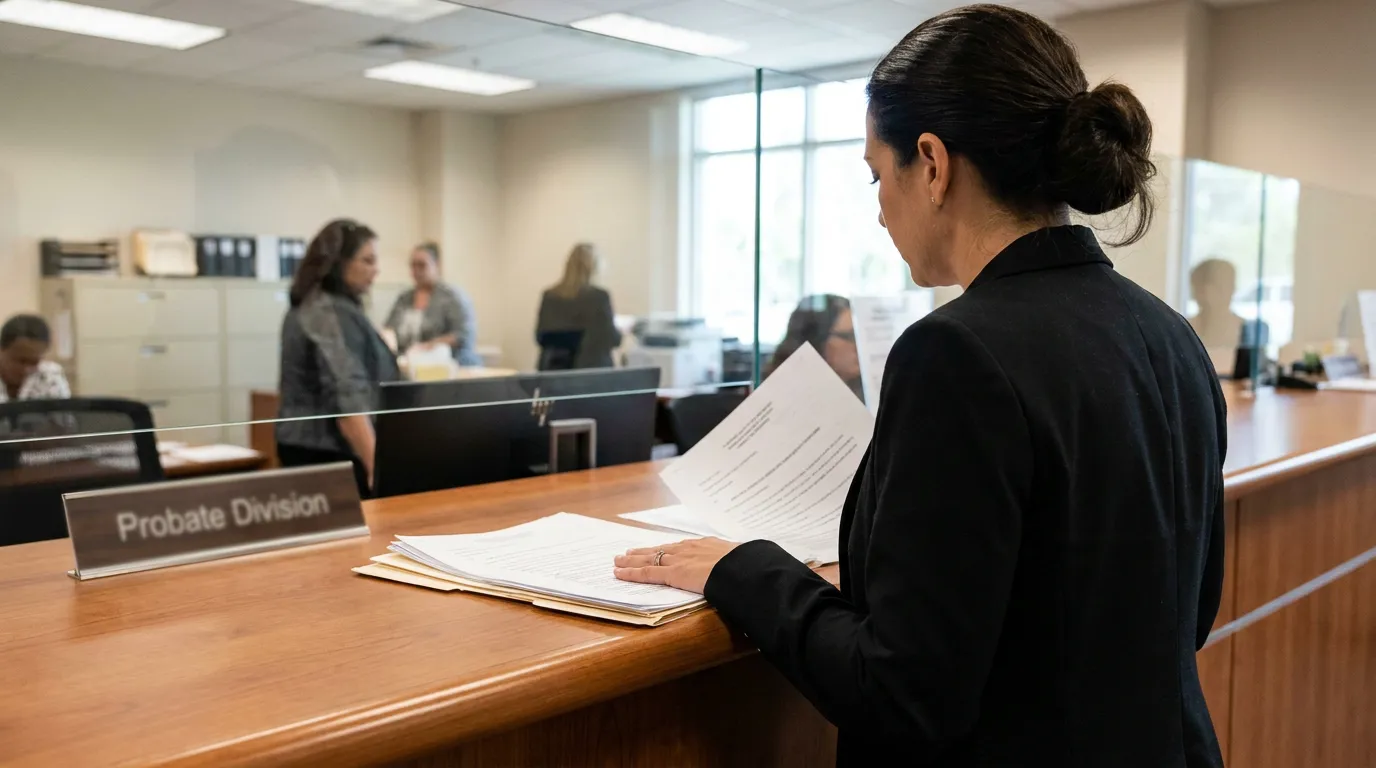
18 Sep What Are Letters of Administration in a Florida Wrongful Death Case?
The Court Document That Unlocks a Florida Wrongful Death Claim
Key Takeaways: Letters of administration grant a personal representative legal authority to act for a decedent’s estate. Under the Florida Wrongful Death Act, only that court-appointed representative may file the lawsuit. Fla. Stat. § 733.301 sets an order of preference for appointment. Nonresident decedents may require ancillary administration under Fla. Stat. § 734.102. The two-year wrongful death deadline under Fla. Stat. § 95.11(4)(d) generally starts on the date of death, with narrow exceptions for medical malpractice and intentional killings. Claims against government entities require separate pre-suit notice under Fla. Stat. § 768.28. Families benefit from opening the estate and investigating liability simultaneously.
When a family loses a loved one due to someone else’s negligence, they often assume they can file suit themselves. Florida law works differently. Under the Florida Wrongful Death Act, only a court-appointed personal representative of the decedent’s estate may bring the action. Letters of administration are the probate court document granting that authority. Under Fla. Stat. § 731.201, "letters" means the authority granted by the court to the personal representative to act on behalf of the estate. Without that document, a wrongful death lawsuit cannot proceed.
If your family is facing this process while grieving, you do not have to navigate probate and litigation deadlines alone. The team at HL Law Group, P.A. helps South Florida families open estates and pursue accountability. Call (954) 713-1212 or contact us now for a free case evaluation.
Why Letters of Administration Wrongful Death Florida Cases Cannot Move Forward Without Them
The requirement is structural, not procedural paperwork. Because Florida channels wrongful death recoveries through the estate, the personal representative is the only party with standing to file. The probate appointment and civil claim are connected tracks, and one gates the other. Defendants or insurers may challenge any complaint filed by a survivor lacking letters.
Once issued, letters allow the personal representative to retain counsel, gather records, negotiate with insurers, file suit, and distribute any recovery according to statutory framework. If you are unsure whether you are the right person to serve, review who can file a wrongful death lawsuit before petitioning the court.
Who the Court Appoints and in What Order
Florida does not leave the choice of personal representative to chance. Fla. Stat. § 733.301(1) establishes an order of preference, subject to the court’s discretion and qualification requirements. In testate estates, preference runs first to the personal representative nominated by the will, then to the person selected by a majority in interest of those entitled to the estate, then to a devisee. In intestate estates, preference runs first to the surviving spouse, then to the person selected by a majority in interest of the heirs, then to the heir nearest in degree.
| Estate Type | First Preference | Second Preference | Third Preference |
|---|---|---|---|
| With a will | Person nominated in the will | Person selected by majority in interest | A devisee |
| Without a will | Surviving spouse | Person selected by majority in interest of heirs | Heir nearest in degree |
The Appointment Is Not Always Permanent
Letters can be revoked. Under Fla. Stat. § 733.301(4)-(5), letters may be revoked in favor of a person entitled to preference who was not served and had not waived that right, and letters may be revoked if a will is subsequently admitted to probate. In a pending wrongful death case, a change in personal representative may affect who controls litigation strategy, though the claim generally continues with a substituted representative. The relevant provisions appear in Florida’s probate administration statutes.
When the Decedent Lived Outside Florida
Not every wrongful death claim involves a Florida resident. Under Fla. Stat. § 734.102, a nonresident decedent’s estate may have ancillary letters issued to a qualified personal representative, who then holds the same rights, powers, and authority as other Florida personal representatives. Ancillary administration is often the practical path when the claim itself is the primary Florida asset.
Creditor Claims Run Alongside the Lawsuit
Once letters issue, the personal representative also manages claims against the estate. Under Fla. Stat. § 733.702(1), claims against the decedent’s estate must be filed on or before the later of three months after first publication of the notice to creditors or, for a creditor required to be served, 30 days after service, subject to the two-year limitation in Fla. Stat. § 733.710. Coordinating the creditor process with a pending recovery is one reason experienced counsel often handles both tracks together.
💡 Pro Tip: Ask your attorney early whether any medical providers, health plans, or lienholders may assert an interest in a future recovery. Identifying them before the creditor period closes simplifies distribution later.
How Probate Timing Interacts With Florida’s Filing Deadlines
Because only a personal representative may file, the probate appointment must be secured within the limitations window. Under Fla. Stat. § 95.11(4)(d), a two-year rule applies to most wrongful death actions, and the clock begins on the date of death rather than the date of the underlying accident. Waiting to open the estate is one of the most common reasons families lose leverage.
Florida law provides limited breathing room in some situations. Under Fla. Stat. § 733.104(1), if a person entitled to bring an action dies before the limitations period expires and the cause of action survives, the personal representative may commence the action by the later of the original limitations deadline or 12 months after the decedent’s death. That provision addresses claims the decedent held during life, not a general extension of the wrongful death deadline. These deadlines appear in Florida’s statute of limitations provisions.
Certain case types follow different timing rules. Under Fla. Stat. § 95.11(5)(c), medical malpractice actions must be commenced within two years from the time the incident occurred or was discovered, but in no event more than four years from the incident, subject to statutory exceptions. Where death resulted from an intentional act described in Fla. Stat. §§ 782.04 or 782.07, an action seeking damages under Fla. Stat. § 768.21 against a natural person may be commenced at any time.
Additional Steps When the Defendant Is a Government Entity
Claims against public agencies carry a separate pre-suit notice requirement. Under Fla. Stat. § 768.28(6)(a), an action may not be instituted unless the claimant presents the claim in writing to the appropriate agency and, except for claims against a municipality or county, also to the Department of Financial Services. For wrongful death claims, that written notice must be presented within two years. The agency must deny the claim or the applicable review period must expire before suit is filed.
Recoveries against the state are also capped. Fla. Stat. § 768.28(1) limits recovery to $200,000 per person and $300,000 per incident, and amounts above those figures may be paid only by further act of the Legislature through a claim bill. Families pursuing claims involving public hospitals, municipalities, or government vehicles should understand these constraints early.
Damages Rules Continue to Evolve
What a personal representative may recover depends on the law in effect for the claim. Florida’s survivor eligibility rules trace to a 1990 amendment making adult children 25 and older and parents of adult children ineligible for non-economic damages in medical negligence cases where the decedent was unmarried and had no minor children. That restriction appears in Fla. Stat. § 768.21(8). Recently, HB 6017 would have repealed that provision, passing 33-4 in the Senate and 104-6 in the House, but Governor DeSantis vetoed it on May 29, 2025. The 1990 restriction therefore remains in effect.
Whether a particular survivor may recover non-economic damages can turn on the decedent’s marital status, the age of surviving children, and whether the claim involves medical negligence. A Fort Lauderdale wrongful death attorney, letters of administration Florida probate, wrongful death personal representative Florida, Broward County probate court, Florida wrongful death act, estate administration wrongful death, Fort Lauderdale probate lawyer, authority to file wrongful death suit, Florida probate documents lawyer can evaluate which damages categories may apply.
Practical Steps Families Can Take Right Away
Early action preserves both evidence and options. Consider the following:
- Gather the death certificate, any will, and identifying information for potential heirs and devisees
- Preserve vehicles, devices, medical records, and photographs before they are repaired, discarded, or overwritten
- Identify every survivor who may hold a preference right so notice and service are handled properly
- Track funeral expenses, lost support, and other economic losses with documentation
- Avoid giving recorded statements to an insurer before counsel is retained
💡 Pro Tip: Petitioning for letters of administration and investigating liability can proceed simultaneously. Families who start both tracks together avoid last-minute pressure from a looming filing deadline.
Frequently Asked Questions
1. Can a surviving spouse file a Florida wrongful death lawsuit without letters of administration?
No. Florida requires a court-appointed personal representative to bring the action, even when the spouse is the primary survivor. The spouse often holds first preference for appointment in an intestate estate.
2. How long does it take to obtain letters of administration in Broward County probate court?
Timing varies based on whether a will exists, whether all interested persons waive notice, and whether any objection is filed. Because the wrongful death deadline continues running, families benefit from starting immediately.
3. What happens if a will is found after letters are already issued?
Under Fla. Stat. § 733.301(5), letters may be revoked and new letters granted if a will is subsequently admitted to probate. This may change who directs litigation, though the claim continues with the substituted representative.
4. Does the personal representative keep the wrongful death recovery?
No. The personal representative acts in a fiduciary capacity and pursues the claim on behalf of the estate and statutory survivors. Any recovery is allocated according to the Florida Wrongful Death Act.
5. What if our loved one died in Florida but lived in another state?
Ancillary administration under Fla. Stat. § 734.102 may allow ancillary letters to issue so a personal representative can act in Florida. This is common when the wrongful death claim is the main Florida-based asset.
Protecting Your Family’s Claim Starts With the Right Authority
Letters of administration are far more than a formality. They are the legal key that allows a personal representative to investigate, negotiate, and file a wrongful death action on behalf of grieving survivors in Fort Lauderdale and throughout Broward County. Between the order of preference under Fla. Stat. § 733.301, the two-year deadline under Fla. Stat. § 95.11(4)(d), creditor claim periods, government notice requirements, and evolving damages rules, the process rewards families who act early and with guidance.
If you are ready to move forward, the attorneys at HL Law Group, P.A. are prepared to guide your family through both the probate appointment and the wrongful death claim. Call (954) 713-1212 or schedule your free consultation today.
Disclaimer: This content is for informational purposes only and is not legal advice. Every case is unique, and results may vary. Consult an attorney about your specific circumstances.
Sorry, the comment form is closed at this time.