
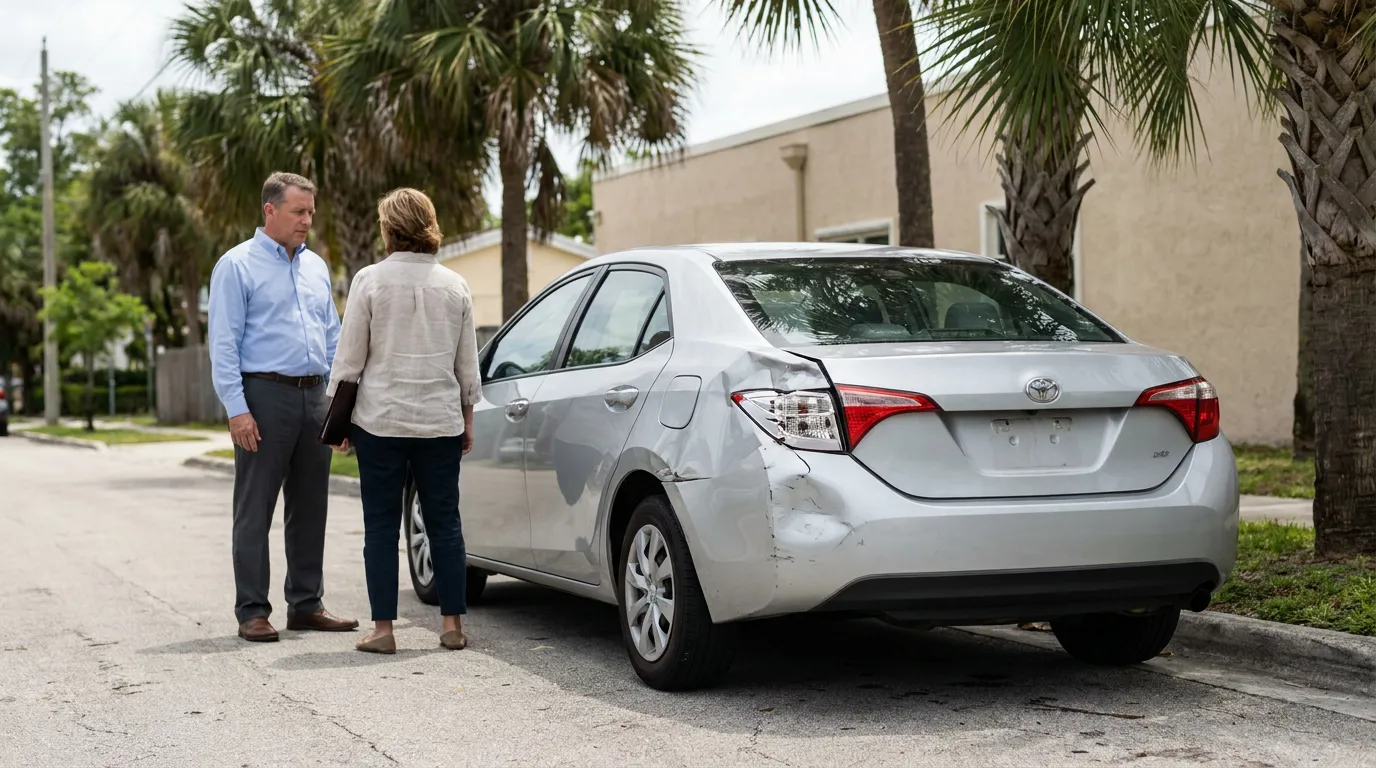
08 Jul Mistakes Uninsured Fort Lauderdale Victims Make in At-Fault Crash Claims
Understanding Your Rights After an Uninsured Crash in South Florida
Key Takeaways: If you have no insurance but the other driver was at fault in a Fort Lauderdale crash, you can often still recover, but you lose your PIP benefits and must pursue the at-fault driver’s liability insurer, delaying reimbursement for months or years. Being uninsured risks license and registration suspension plus reinstatement fees. Costly mistakes include admitting fault at the scene, assuming excluded coverage applies, waiting to preserve evidence, and overlooking additional liable parties. Florida’s modified comparative fault law bars recovery if you are more than 50% at fault and reduces it proportionally otherwise. A strict two-year deadline applies to negligence and wrongful death claims. Acting quickly and seeking legal guidance gives uninsured victims the strongest chance at compensation.
Getting hurt by another driver when you have no coverage is one of the most stressful situations a Fort Lauderdale motorist can face. Many assume that because the other driver caused the wreck, their lack of insurance won’t matter. The reality is more complicated, and mistakes uninsured victims make after a crash can quietly destroy an otherwise valid claim.
If you are recovering from injuries and worried about your coverage gap, you don’t have to navigate this alone. The team at HL Law Group, P.A. helps injured South Floridians understand their options and pursue full recovery. Call us at (954) 713-1212 or reach out through our free consultation request form to discuss your situation today.
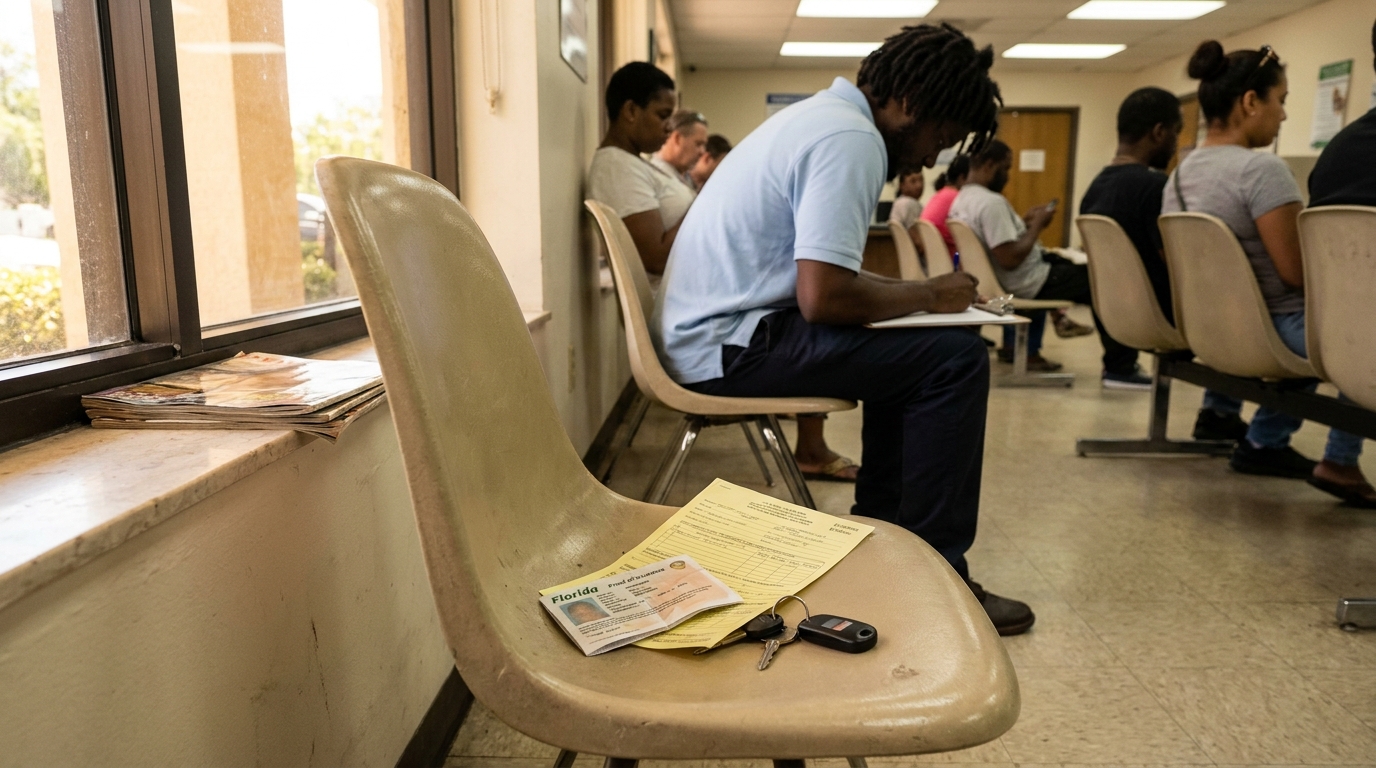
Why Florida’s No-Fault System Changes Everything
Florida operates under a mandatory no-fault insurance framework that shapes every uninsured claim. In mandatory no-fault states, including Florida, Hawaii, Kansas, Massachusetts, Michigan, Minnesota, New York, North Dakota, and Utah, you are required to purchase PIP coverage, and your right to sue an at-fault driver is restricted. The ordinary path to recovery begins with your own policy, not the other driver’s.
In practical terms, a no-fault system requires you to look inward first for initial medical costs. The core benefit, called Personal Injury Protection (PIP), pays for these losses up to your policy’s limits regardless of fault. An uninsured victim simply doesn’t have this first layer of protection, which is why timing and strategy become critical.
PIP coverage applies only to bodily injury losses. Damage to your vehicle is handled through the traditional fault-based system. You can review how these no-fault principles work in this overview of no-fault car insurance rules.
💡 Pro Tip: Even if you were uninsured at the time of the crash, seek medical evaluation immediately. Gaps in treatment give insurers an argument to minimize the connection between the collision and your injuries.
What Happens If You Have No Insurance But the Other Driver Was at Fault
You may still recover, but you lose valuable protections and face added obstacles. Under Fla. Stat. § 627.736(1), Florida’s PIP statute provides up to $10,000 in combined medical and disability benefits and $5,000 in death benefits. An uninsured Fort Lauderdale victim forfeits access to these immediate no-fault benefits entirely, which can delay medical reimbursement significantly.
Because you cannot tap your own PIP, your recovery depends on pursuing the at-fault driver’s liability insurer. While an insured victim can begin receiving medical cost reimbursement almost immediately, an uninsured victim must wait for a liability claim or lawsuit to resolve, which can take months or years. This delay makes early legal guidance especially valuable.
Fla. Stat. § 627.7311 provides that Florida’s No-Fault Law provisions have full force and effect regardless of whether they are expressly included in an insurance policy form. That rule is directed at insurers offering PIP policies, ensuring statutory requirements control over conflicting general policy language. An uninsured victim’s inability to access PIP-type benefits they never purchased flows from the general structure of Florida’s No-Fault Law (Fla. Stat. §§ 627.730, 627.736), not from § 627.7311 alone.
The Compliance Consequences Victims Overlook
Driving without required coverage in Florida carries penalties that compound a difficult situation. Under Fla. Stat. § 627.7407(5)(a) through (b), failure to maintain PIP coverage may result in suspension of the policyholder’s driver license and vehicle registration. An uninsured victim can be dealing with injuries and a suspended license simultaneously.
Under Fla. Stat. § 324.0221(2)(a) through (b), the Department of Highway Safety and Motor Vehicles must suspend the registration and driver license of an owner who lacked required security. Reinstatement fees generally start at $150 for a first offense and can escalate to $500 for repeat violations within three years. These are civil administrative consequences, not part of your personal injury lawsuit.
Common Mistakes That Undermine an At-Fault Crash Claim
Uninsured victims frequently make avoidable errors that reduce or eliminate their compensation. Understanding these car accident claim mistakes in Florida can help you protect your position from day one. Below are the most damaging missteps our Broward County car accident lawyer team sees.
- Admitting partial fault at the scene. Casual apologies or statements to adjusters can be treated as admissions.
- Assuming a named-driver exclusion still provides coverage. Under Fla. Stat. § 627.747(1) and (3), a policy can exclude PIP, property damage, bodily injury, and uninsured motorist coverage for identified drivers, leaving them with none.
- Waiting too long to preserve evidence and consult counsel.
- Overlooking additional sources of recovery beyond the at-fault driver.
The comparative fault trap deserves special attention. Under Fla. Stat. § 768.81(6), Florida’s modified comparative fault law bars any recovery for a claimant who is found more than 50% at fault for their own harm. If the at-fault driver’s insurer successfully argues you share more than half the blame, you may walk away with nothing. You can read the full text of Florida’s comparative negligence statute to see how the threshold operates.
Even partial fault reduces your compensation proportionally. This is why what you say at the scene matters. No-fault states limit recovery for non-economic damages like pain and suffering unless a statutory injury threshold is met. You generally cannot pursue non-economic damages unless your injuries meet Florida’s serious injury threshold under Fla. Stat. § 627.737.
💡 Pro Tip: Never guess about fault when speaking with an adjuster. A neutral statement such as "I am still gathering information" protects you far better than speculation.
Additional Recovery Sources You Might Miss
Many uninsured victims focus only on the at-fault driver and miss other potentially liable parties. Under Fla. Stat. § 324.021(9)(b)2 through 3, Florida’s financial responsibility statute establishes liability limits when an uninsured permissive user or lessee is involved. If an at-fault driver borrowed a vehicle, the owner may face vicarious liability under Florida’s dangerous instrumentality doctrine.
Vehicle owner liability can meaningfully expand your options. For an owner who is a natural person and loans a vehicle to a permissive user, this vicarious liability is capped at up to $100,000 per person and $300,000 per incident for bodily injury, plus up to $50,000 for property damage. When the operator is uninsured or carries less than $500,000 in combined coverage, the owner may be liable for an additional $500,000 in economic damages only, reduced by any amounts recovered from the driver and their insurance. These caps limit only the owner’s vicarious liability, not any independent negligence. Identifying every source of at-fault driver liability in Florida is central to maximizing car accident compensation in Fort Lauderdale.
| Coverage Reality | Insured Victim | Uninsured Victim |
|---|---|---|
| Immediate PIP medical benefits | Available up to policy limits | Not available |
| Right to pursue at-fault driver | Yes, subject to threshold | Yes, subject to threshold |
| License/registration exposure | Lower | Suspension risk |
| Timing of recovery | Often faster | Often delayed |
Deadlines That Can Quietly End Your Claim
Florida imposes a strict window for filing a personal injury lawsuit, and missing it is often fatal to a claim. Under Fla. Stat. § 95.11(5)(a) and (e), an uninsured victim generally has two years from the crash date to file a negligence lawsuit, and wrongful death claims fall under the same two-year limitation. Missing this deadline typically results in complete loss of the right to sue.
This shortened period reflects Florida’s tort reform under House Bill 837, effective March 24, 2023, which cut the negligence statute of limitations from four years to two years. At-fault crash victims now have far less time to file suit than many assume.
Exceptions such as tolling may exist, but courts interpret them narrowly. Fla. Stat. § 95.11 contains multiple limitation tiers, so the applicable deadline depends on the claim type. Don’t assume any extension applies automatically. If you are unsure how to file after a crash without coverage, this guide on whether a Florida car accident claim can proceed without insurance is a helpful starting point.
💡 Pro Tip: Calendar your deadline conservatively. Waiting until the final weeks to seek help leaves little time to investigate liability or negotiate.
How Legal Guidance Protects Uninsured Victims
Working with a knowledgeable advocate helps you avoid errors that quietly reduce recovery. A dedicated Fort Lauderdale car accident attorney can investigate liability, gather police reports and witness statements, and identify every responsible party. Early, thorough documentation often separates a strong claim from a denied one.
Our team handles complex crash claims throughout Broward County and South Florida. We understand how insurers approach uninsured victims and how to counter tactics designed to shift blame.
Frequently Asked Questions
1. Can I still sue if I was uninsured but the other driver caused the crash?
Yes, you generally retain the right to pursue the at-fault driver. Being uninsured doesn’t eliminate your negligence claim, though it removes your PIP benefits and can create license consequences under Fla. Stat. § 324.0221.
2. What is the deadline to file my claim in Fort Lauderdale?
You generally have two years from the crash date under Fla. Stat. § 95.11(5). This shortened period applies to negligence and wrongful death actions, and exceptions are interpreted narrowly.
3. Will being uninsured reduce my compensation?
It can, depending on shared fault. Under Fla. Stat. § 768.81(6), being more than 50% at fault bars recovery entirely, and partial fault reduces it proportionally.
4. Can anyone besides the at-fault driver be responsible?
Possibly, if another party contributed to the crash. A vehicle owner may face vicarious liability under Fla. Stat. § 324.021(9)(b) when an uninsured or underinsured driver was using their vehicle with permission.
5. What should I avoid saying after an uninsured accident?
Avoid statements that could be read as admitting fault. Even a polite apology can be used to argue comparative negligence and reduce your award.
Protecting Your Recovery Starts Today
Being uninsured after an at-fault crash makes your situation harder, but it doesn’t necessarily leave you without options. Between the loss of PIP benefits, comparative fault risks, license consequences, and a two-year filing deadline, mistakes can be costly. Understanding what happens if you have no insurance but the other driver was at fault, and acting quickly, gives you the strongest chance at meaningful compensation.
You deserve guidance from a team that takes your recovery seriously. Contact HL Law Group, P.A. for a free case evaluation, call us at (954) 713-1212, or schedule your consultation online so we can start protecting your rights today.
Sorry, the comment form is closed at this time.