

25 Jul Is It Legal to Ride a Class 3 E-Bike in Fort Lauderdale Bike Lanes?
Understanding Class 3 E-Bikes and Your Rights on Fort Lauderdale Roads
Key Takeaways: In most cases, it is legal to ride a Class 3 e-bike in Fort Lauderdale bike lanes, though this right comes with important conditions. Florida law defines Class 3 e-bikes as pedal-assist models that stop providing assistance at 28 mph and grants e-bike riders the same access to bike lanes, streets, and multiuse paths as traditional cyclists. Florida does not impose a statewide minimum age for Class 3 e-bikes, and riders are not required to carry a license, insurance, or vehicle registration, though local governments may set their own requirements. Local Fort Lauderdale and Broward County ordinances can restrict access on certain paths and may add requirements like minimum ages or photo identification. Motorists must give e-bike riders at least three feet of clearance when passing, and violations of this rule can help establish negligence in an injury claim. If you are injured, preserving evidence and consulting an attorney promptly is essential given Florida’s strict filing deadlines.
Yes, in most cases it is legal to ride a Class 3 e-bike in Fort Lauderdale bike lanes, but that right comes with important conditions. Florida law generally treats electric bicycles like traditional bicycles, giving riders access to bike lanes, streets, and multiuse paths. However, local ordinances and specific rules for Class 3 models can change where and how you ride.
If you were injured while riding your e-bike, the team at HL Law Group, P.A. is ready to help. Call us today at (954) 713-1212 or reach out through our free consultation request form to discuss your options.
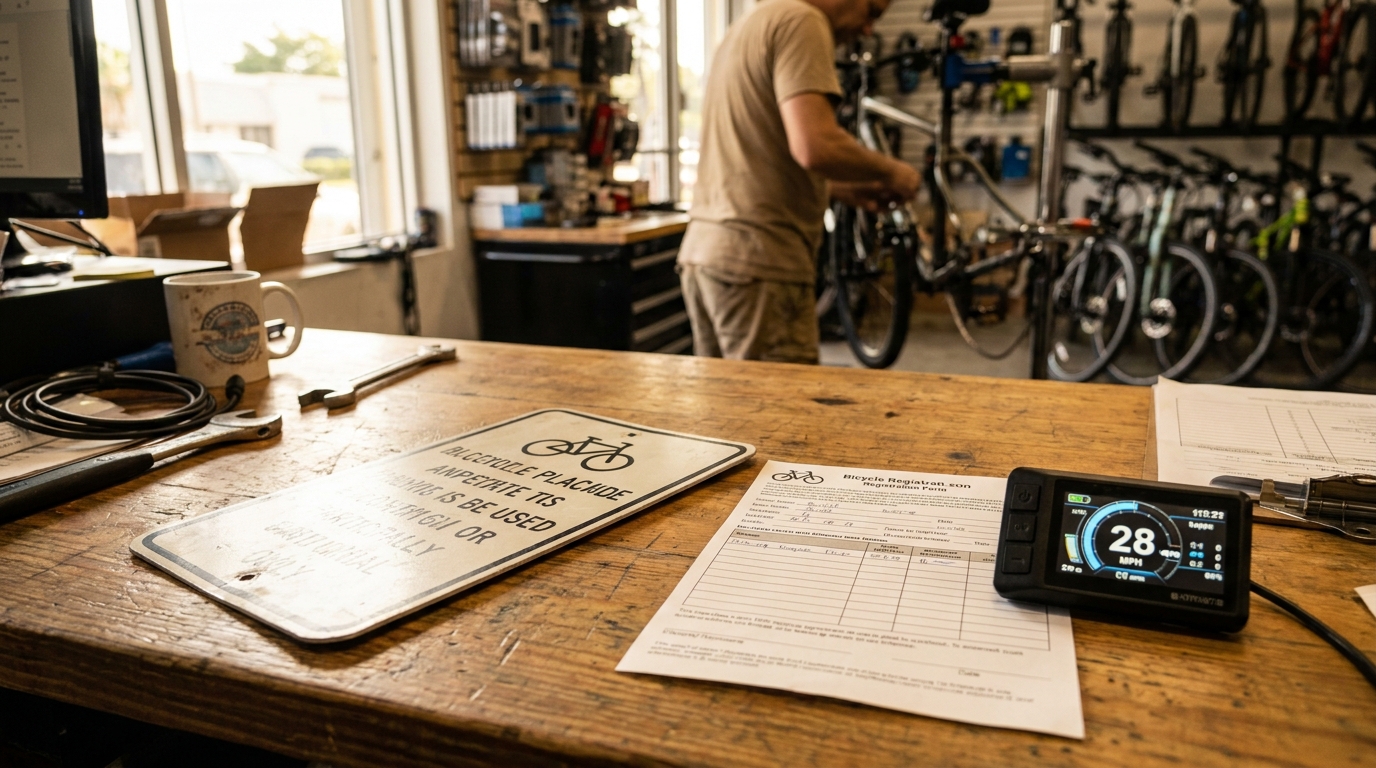
What Florida Law Says About E-Bike Classifications
Florida established a three-tier system to categorize electric bicycles based on motor function and speed. This structure, created by a 2020 session law, helps riders, drivers, and courts understand which rules apply.
The Three-Class System Explained
Florida groups e-bikes into three distinct categories under state statute. These distinctions determine speed limits, access rights, and local regulation.
All three classifications require a motor of less than 750 watts and fully operable pedals.
- Class 1: Pedal-assist only, motor stops at 20 mph.
- Class 2: Throttle-capable, motor stops at 20 mph.
- Class 3: Pedal-assist only, motor stops at 28 mph.
Why the Class 3 Distinction Matters
A Class 3 e-bike is the fastest category recognized under Florida law. Florida law formally defines a Class 3 electric bicycle as one equipped with a motor that provides assistance only when the rider is pedaling and that ceases to provide assistance when the e-bike reaches 28 mph. This is a pedal-assist-only system, distinguishing it from Class 2 e-bikes that can be throttle-propelled. These rules appear in Fla. Stat. § 316.003(23)(c). Because Class 3 e-bikes travel faster, the law and local governments may impose additional safeguards.
💡 Pro Tip: Check the permanent label on your e-bike frame before your first ride.
Where Class 3 E-Bikes Can Legally Ride in Fort Lauderdale
Under Florida law, e-bike riders enjoy nearly the same access to roadways and bike lanes as traditional cyclists. E-bike operators, including those on Class 3 e-bikes, are generally afforded the same rights and duties as traditional bicycle riders. This means a Class 3 e-bike rider in Fort Lauderdale is legally permitted to ride in bike lanes, on streets, highways, roadways, shoulders, and bicycle or multiuse paths.
The statute is explicit about where operators may travel. Florida statute expressly permits e-bike operators to ride wherever bicycles are allowed, including bicycle lanes. These access rights are codified in Fla. Stat. § 316.20655(7). You can review the full text of Florida’s electric bicycle statute to see how the Legislature framed these privileges.
Class 3 riders should also understand how age rules apply. Florida does not set a statewide minimum age to operate a Class 3 e-bike; the 2020 e-bike legislation removed the prior prohibition on operators under 16. However, Fla. Stat. § 316.20655(8) authorizes local governments to adopt their own minimum age requirements, so Fort Lauderdale or Broward County could require riders to be a certain age.
💡 Pro Tip:
All e-bikes sold in Florida must display a permanently affixed label showing the classification number, top assisted speed, and motor wattage. Riders should never tamper with or modify their e-bike’s motor to exceed its classified speed, as doing so may create legal and liability complications.
How Local Broward County Ordinances Can Change the Rules
Statewide access rights are not absolute, and local governments retain meaningful control over e-bike use. Local governments, including Fort Lauderdale and Broward County, retain the authority to adopt ordinances that restrict or prohibit e-bike operation on specific paths, trails, sidewalks, or multiuse paths. Riders should check local Fort Lauderdale and Broward County ordinances before assuming universal access.
The statute preserves this local authority in clear terms. State law preserves local government authority, meaning Fort Lauderdale and Broward County can adopt ordinances regulating e-bike operation and can restrict e-bikes on paths and trails under their jurisdiction. This is set out in Fla. Stat. § 316.20655(1).
Municipalities may impose extra conditions on e-bike operators. Local governments like Fort Lauderdale may also adopt ordinances setting minimum age requirements for e-bike operators and requiring riders to carry government-issued photo identification. These local powers are recognized in Fla. Stat. § 316.20655(8). Because e-bike regulations Broward County riders face can shift by jurisdiction, staying informed matters.
💡 Pro Tip: Before riding an unfamiliar trail, confirm current rules with the managing agency. Ordinances can change, and posted signage often reflects the most up-to-date restrictions.
Driver Duties and Proving Negligence After an E-Bike Crash
Florida law imposes specific duties on motorists that protect e-bike riders in bike lanes. Florida law requires that any motor vehicle driver overtaking an e-bike, whether in a shared travel lane or a designated bicycle lane, must maintain a minimum 3-foot clearance. This rule applies to e-bikes just as it does to traditional bicycles. A driver’s violation of this rule can help establish negligence in an e-bike accident injury claim, subject to the specific facts of each case.
This three-foot passing rule is grounded in the state’s traffic code. The requirement appears in Fla. Stat. § 316.083, part of the broader Florida Uniform Traffic Control Law. When a driver ignores this safe-passing distance and causes a collision, that violation may support a finding of negligence, subject to the specific facts of each case.
E-bike riders carry fewer regulatory burdens than motorists, which affects how claims unfold. E-bike riders in Florida, including those on Class 3 models, are not required to carry motor vehicle insurance, obtain a driver’s license, or register their bike as a motor vehicle. This removes significant legal burdens compared to moped or motorcycle riders, but it also means e-bike riders generally rely on their own available insurance or a personal injury claim if involved in an accident. This is confirmed by Fla. Stat. § 316.20655(2).
💡 Pro Tip: After a crash, photograph the scene, the bike lane markings, and your injuries as soon as it is safe. This evidence often proves decisive when insurers dispute fault.
When to Contact a Bicycle Accident Attorney Fort Lauderdale Riders Trust
Injured e-bike riders often face aggressive insurers and comparative-fault arguments that a skilled advocate can rebut. A knowledgeable bicycle accident attorney Fort Lauderdale residents rely on can reconstruct the scene, gather forensic evidence, and quantify both current and future damages.
Timing is critical because Florida imposes strict deadlines on injury claims. In general, injured parties may be required to file within a limited window, and courts interpret exceptions narrowly. You can learn more about Florida’s two-year statute of limitations and why acting promptly matters.
HL Law Group focuses on advocating for injured cyclists and pedestrians throughout South Florida. If you were hurt while riding, our team can evaluate liability, insurance coverage, and damages tailored to your situation. Learn more about our approach on our e-bike accident lawyer Fort Lauderdale practice page.
Frequently Asked Questions
-
Can I ride my Class 3 e-bike in any Fort Lauderdale bike lane?
Generally, yes, but with important exceptions. State law allows e-bikes wherever bicycles are permitted, yet local ordinances may restrict certain paths. Always confirm local rules before riding.
-
Do I need a license or insurance to ride a Class 3 e-bike in Florida?
No, state law does not require these for e-bike operators. Riders are exempt from driver licensing, registration, and financial responsibility rules under Fla. Stat. § 316.20655(2). However, your own coverage or a personal injury claim may be your primary source of compensation after a crash.
-
What is the minimum age to ride a Class 3 e-bike?
Florida does not set a statewide minimum age. The 2020 e-bike law removed the prior under-16 prohibition, and Fla. Stat. § 316.20655(8) allows local governments to adopt their own minimum age requirements. Check Fort Lauderdale and Broward County rules.
-
How does the three-foot passing law help my injury claim?
It establishes a clear duty that drivers owe to e-bike riders. When a motorist fails to give at least three feet while overtaking, that violation of Fla. Stat. § 316.083 may support a negligence claim, depending on the specific evidence.
-
How soon should I speak with an attorney after an e-bike crash?
As soon as reasonably possible. Evidence can disappear quickly, and Florida’s filing deadlines are strict. Early legal guidance helps preserve traffic footage, witness accounts, and other proof.
Ride Confidently and Know Your Rights in South Florida
Class 3 e-bikes are generally welcome in Fort Lauderdale bike lanes, but responsible riding means understanding both state law and local ordinances. Florida grants e-bike operators broad access while protecting them with rules like the three-foot passing requirement. At the same time, Broward County and Fort Lauderdale can impose their own restrictions, so staying informed is essential.
Do not navigate the aftermath of a serious e-bike crash alone. Contact HL Law Group, P.A. today by calling (954) 713-1212 or by submitting our online case evaluation form for a free consultation. Our dedicated team is ready to fight for the compensation you deserve.
Sorry, the comment form is closed at this time.