
14 Jun How to Preserve Black Box Data After a Truck Crash in Fort Lauderdale
Why Black Box Data Can Make or Break Your Fort Lauderdale Truck Crash Case
Key Takeaways:
Black box data from commercial trucks provides critical evidence of driver negligence, including speed, braking patterns, and hours-of-service violations. Federal law requires motor carriers to retain electronic logging device (ELD) records for six months, but data can be overwritten quickly. A spoliation letter from an attorney compels trucking companies to preserve this data. Florida law incorporates federal commercial motor vehicle regulations, making them enforceable in truck crash cases. Contacting a truck accident attorney in Fort Lauderdale promptly after a crash is essential to protect this evidence.
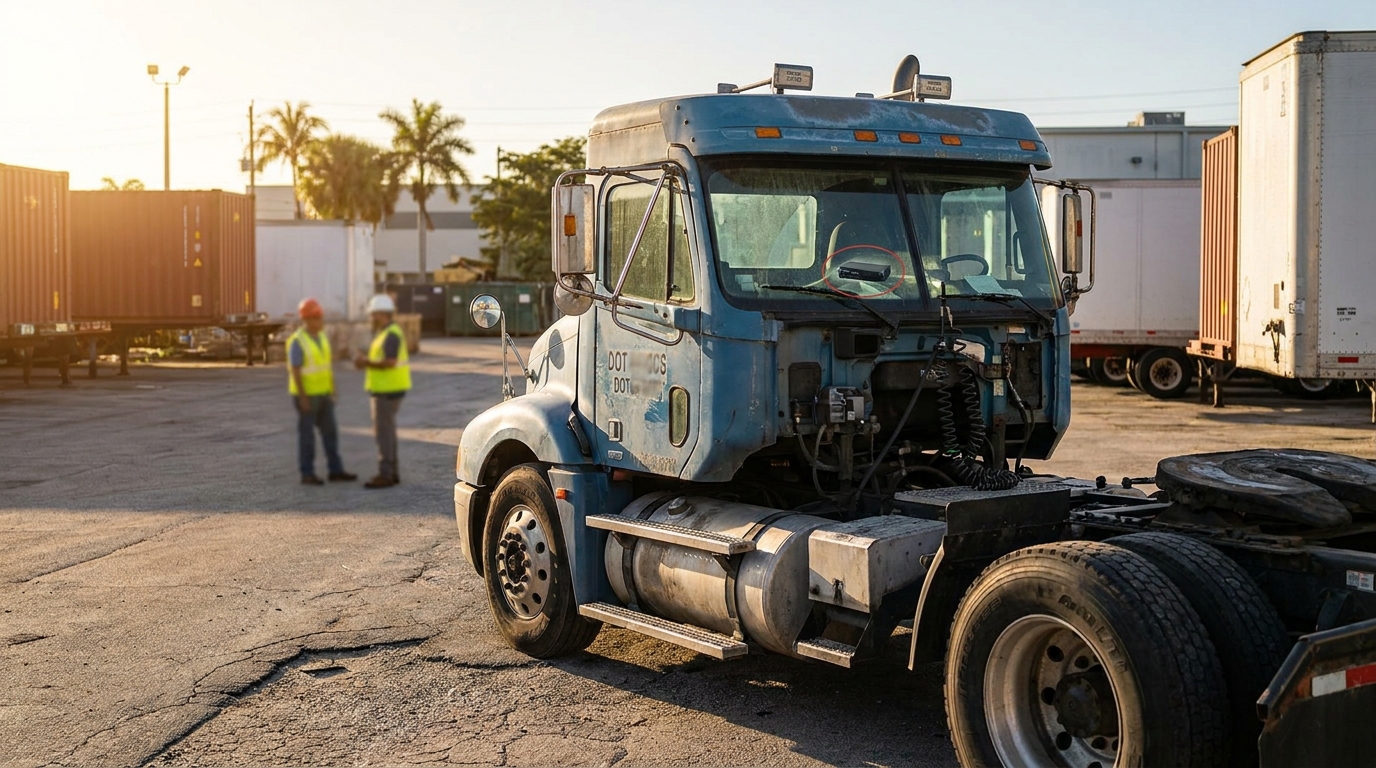
If you’ve been seriously injured in a commercial truck collision on Fort Lauderdale’s highways, the electronic data stored inside the truck may hold the key to proving what happened. Modern commercial trucks carry event data recorders, often called "black boxes," that capture detailed information about the truck’s operation before, during, and after a crash. This data can reveal speeding, hard braking, hours-of-service violations, and other critical details. The problem is this data can be overwritten, lost, or destroyed if you don’t act quickly. Understanding how to protect this evidence is essential for any victim pursuing a commercial truck accident claim in Florida.
HL Law Group, P.A. has extensive experience helping truck crash victims in South Florida secure the evidence they need to build strong claims. Call us at (954) 713-1212 or reach out to our team today for a free consultation.
What Is Black Box Data in a Commercial Truck?
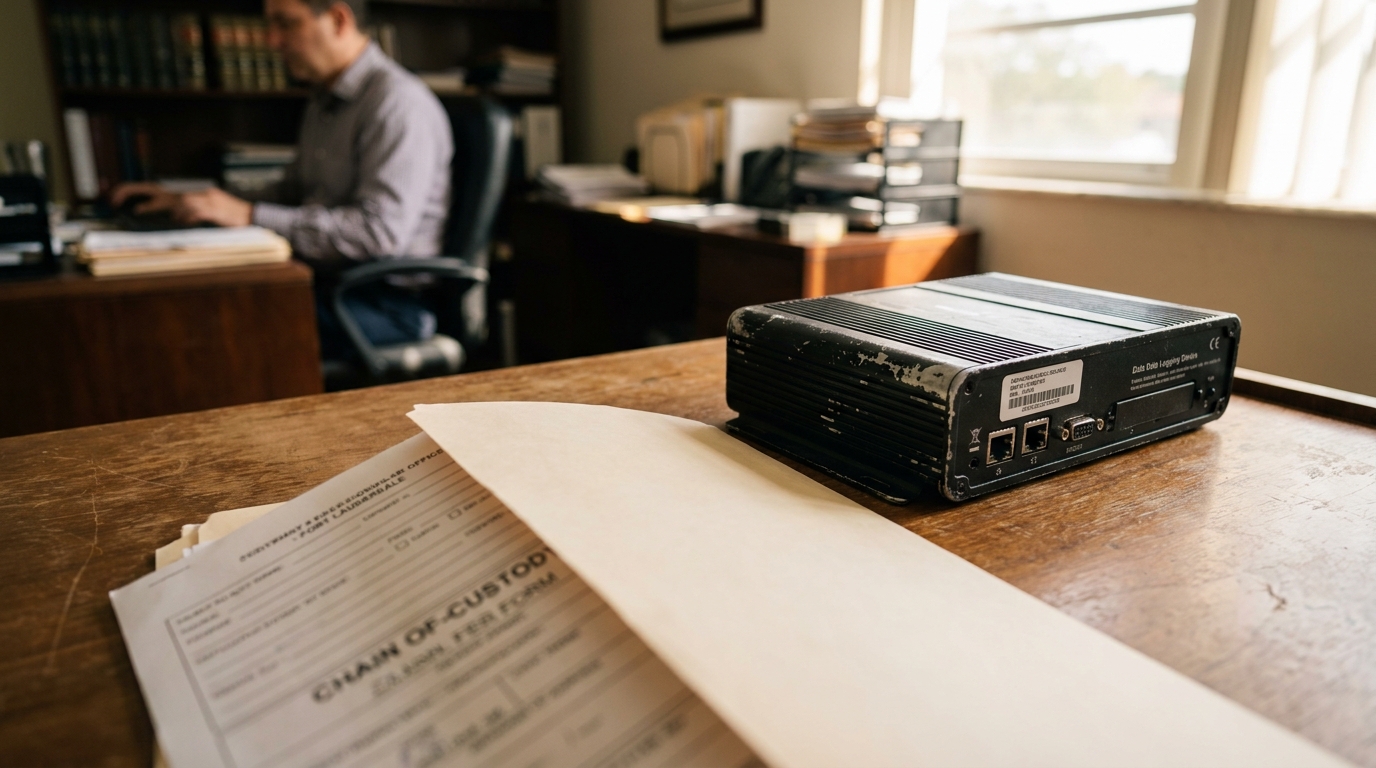
Commercial trucks are equipped with electronic control modules (ECMs) and event data recorders that function like airplane black boxes. These devices continuously monitor and record truck operation. According to Justia, trucks "may contain devices known as event data recorders, which contain information about the operation of the truck," and this data may reveal violations of federal trucking regulations.
What Information Does a Black Box Record?
The data captured by these devices is remarkably detailed. Under 49 CFR § 395.26(b), ELDs automatically record date, time, geographic location, engine hours, vehicle miles, driver identification, and vehicle identification. ECMs may also store information about vehicle speed, throttle position, brake application, cruise control usage, and sudden deceleration events. For a Fort Lauderdale truck crash lawyer, this information establishes exactly what the driver was doing in the seconds before impact.
💡 Pro Tip: Black box data and ELD records are separate but complementary evidence sources. Learn more in our guide on ELDs in Florida truck crash cases.
Why Preserving Black Box Data Requires Urgent Action
Time is the single biggest threat to black box data after a truck crash. ECM data can be overwritten as the truck continues to operate, and some devices only retain a limited window of pre-crash information. Trucking companies control the vehicles and the data they contain. Without intervention, critical truck accident evidence in Fort Lauderdale cases can vanish before examination.
Federal regulations provide some protection. Under 49 CFR § 395.22(i)(1), motor carriers must retain backup copies of ELD records for six months on a device separate from the original. However, this requirement applies to ELD logs specifically and doesn’t cover all ECM data. Delays in initiating legal action can result in permanent loss of records.
💡 Pro Tip: Don’t assume the trucking company will voluntarily preserve evidence. Their legal team may begin investigating within hours of the crash.
How a Truck Accident Attorney in Fort Lauderdale Preserves This Evidence
One of the most effective tools for protecting black box data is a spoliation of evidence letter. An attorney sends this letter to the trucking company, demanding preservation of black box data and other crash-related records. This puts the carrier on legal notice that destroying or failing to preserve relevant evidence may result in serious court sanctions, including adverse inference instructions that tell the jury to assume the destroyed evidence was unfavorable to the trucking company.
Critical Records to Demand Alongside Black Box Data
Black box data alone doesn’t tell the full story. A thorough spoliation letter should demand preservation of:
- Drug and alcohol testing results
- Driver’s safety record and qualification file
- Truck inspection and maintenance records
- Dispatch instructions and trip logs
- Weigh station reports and fuel receipts
Under 49 C.F.R. §391.51, motor carriers must maintain driver qualification files, including driving records, employment history, road test results, and medical clearances, for the entire duration of employment and three years after. These records can reveal whether the carrier negligently hired or retained an unqualified driver.
💡 Pro Tip: Get a copy of the police report and any truck condition report prepared by a certified inspector assisting police. These early reports document conditions that may change before litigation begins.
Florida Laws That Strengthen Your Truck Crash Claim
Florida has incorporated federal commercial motor vehicle safety regulations directly into state law. Under Fla. Stat. §316.302(1)(a), all owners and drivers of commercial motor vehicles operating on Florida highways in interstate commerce must comply with federal rules contained in 49 CFR parts 382, 385, and 390-397. These include ELD requirements, hours-of-service rules, and vehicle maintenance standards.
These federal standards also apply to trucks operating entirely within Florida. Under Fla. Stat. §316.302(1)(b), intrastate commercial vehicles are subject to the same federal regulations. Florida also enforces its own hours-of-service limits under Fla. Stat. §316.302(2)(b), prohibiting driving more than 12 hours following 10 consecutive hours off duty or beyond the 16th hour after coming on duty. Violations documented through Florida’s commercial vehicle regulations serve as strong evidence of negligence.
The Dangerous Instrumentality Doctrine and Trucking Company Liability
Florida’s dangerous instrumentality doctrine adds another layer of accountability for truck owners. This doctrine, established in Southern Cotton Oil Co. v. Anderson, 86 So. 629 (Fla. 1920), makes the owner of a vehicle vicariously liable for injuries caused by negligent operation of that vehicle by someone the owner entrusted with its use. In truck crash cases, this means the trucking company that owns the tractor-trailer may be held liable even if it wasn’t directly at fault.
Federal regulations reinforce this responsibility. Under 49 C.F.R. §390.11, whenever a duty is prescribed for a driver or prohibition is imposed, it’s the motor carrier’s duty to require compliance. Courts have recognized these duties as nondelegable, meaning trucking companies cannot escape responsibility by claiming they delegated safety obligations to a third party or the driver.
| Evidence Type | Source | Retention Period | Why It Matters |
|---|---|---|---|
| ELD records | Electronic logging device | 6 months (federal backup requirement) | Documents hours of service, location, and driving time |
| ECM/black box data | Electronic control module | Varies; can be overwritten quickly | Records speed, braking, and pre-crash vehicle behavior |
| Driver qualification file | Motor carrier records | Duration of employment plus 3 years after | Reveals hiring practices and driver history |
| Drug/alcohol test results | Motor carrier records | Varies by test type | Shows impairment or compliance failures |
| Inspection reports | Law enforcement/carrier | Varies | Documents vehicle condition at or near time of crash |
Steps to Take Immediately After a Fort Lauderdale Truck Crash
Your actions in the first hours and days after a truck collision can directly impact your ability to recover compensation. Under Fla. Stat. §316.065, the driver of a vehicle involved in a crash resulting in injury, death, or at least $500 in property damage must immediately contact local law enforcement. This generates an official crash report and may trigger inspection of the truck’s condition.
💡 Pro Tip: Florida law under Fla. Stat. §316.066(2) makes crash reports confidential for 60 days and limits release during that period to involved parties, their legal representatives, licensed insurance agents, insurers, law enforcement agencies, victim services programs, and certain governmental entities. Separately, Fla. Stat. §324.242(2) governs the release of insurance policy numbers held by the Department of Highway Safety and Motor Vehicles and requires proof of a crash report as a prerequisite. Contacting an attorney early helps ensure prompt access to crash reports and related information.
Beyond calling law enforcement, contact a Broward County truck crash attorney as soon as possible. An attorney experienced with commercial truck accidents can send a spoliation letter within hours, hire accident reconstruction professionals, and begin obtaining records before critical evidence disappears. Waiting even a few weeks can mean the difference between having definitive proof of negligence and relying on incomplete records.
💡 Pro Tip: Keep your own records from the start. Photograph the scene, collect witness information, and document your injuries. These personal records complement technical evidence from the truck’s black box.
Frequently Asked Questions
1. How long does black box data last after a truck crash in Florida?
The retention period varies by data type and device. Federal law under 49 CFR § 395.22(i)(1) requires motor carriers to keep backup ELD records for six months. However, ECM data may be overwritten much sooner if the truck returns to service. Acting quickly to send a preservation demand is essential.
2. Can the trucking company legally destroy black box data?
Once on notice of a potential claim, a trucking company has a legal duty to preserve relevant evidence. If a carrier destroys black box data after receiving a spoliation letter, the court may impose sanctions including adverse inference instructions, monetary penalties, or even default judgment.
3. Do I need an attorney to get black box data from the trucking company?
In most cases, yes. Trucking companies generally won’t voluntarily turn over ECM data to an unrepresented crash victim. A Florida truck wreck lawyer can issue formal preservation demands, subpoena records during litigation, and retain forensic professionals to download and interpret the data.
4. Does Florida law require trucks to have black boxes?
Florida doesn’t have a separate state law mandating event data recorders. However, under Fla. Stat. §316.302, Florida incorporates federal regulations from 49 CFR parts 390-397, which include ELD requirements for most commercial motor vehicles. Many modern trucks also come equipped with ECMs as standard equipment.
5. What if the truck was operating only within Florida and not crossing state lines?
Intrastate trucks in Florida are still subject to federal safety regulations. Under Fla. Stat. §316.302(1)(b), vehicles engaged in intrastate commerce must comply with the same 49 CFR rules that apply to interstate carriers. This means ELD data preservation, hours-of-service requirements, and driver qualification standards apply to trucks operating solely within Florida.
Protect Your Claim by Acting Now
Black box data is among the most powerful evidence available in a commercial truck accident case, but it’s also among the most fragile. Every day that passes after a truck crash increases the risk that critical ECM data, ELD records, and carrier documents will be lost or destroyed. Florida law and federal regulations provide the framework to hold trucking companies accountable, but only if you preserve the evidence needed to prove your case. If you were injured in a truck collision in Fort Lauderdale or anywhere in Broward County, taking immediate steps to secure this data can significantly strengthen your path to fair compensation.
Don’t wait for the trucking company’s legal team to control the narrative. Contact HL Law Group, P.A. today by calling (954) 713-1212 or schedule your free consultation to discuss how we can help preserve the evidence that matters most in your truck crash case.
Sorry, the comment form is closed at this time.