

25 Oct Can You Sue a Trailer Manufacturer After a Fort Lauderdale Underride Crash?
When an Underride Guard Fails: Your Rights After a Fort Lauderdale Trailer Crash
Key Takeaways: Yes, you may be able to sue a trailer manufacturer after a Fort Lauderdale underride crash if the rear impact guard was defective, poorly designed, or failed to meet federal safety standards. These accidents occur when a passenger vehicle slides underneath a tractor-trailer, often bypassing the car’s safety features. Under Florida product liability law, manufacturers can be held liable for design flaws, manufacturing defects, or negligence. Success depends on preserving evidence quickly, and your compensation may be affected by Florida’s comparative fault rules and strict filing deadlines.
Yes, under certain circumstances you may be able to sue a trailer manufacturer after an underride crash in Fort Lauderdale. An underride crash happens when a passenger vehicle slides under the rear or side of a tractor-trailer. These crashes are often among the most violent on South Florida roads, because the trailer bed can strike at windshield height and the car’s crumple zones and airbags may never engage. If the rear impact guard was badly designed, badly built, or did not meet federal safety standards, Florida product liability law may allow the injured person or their family to hold the manufacturer responsible. A claim may also name other parties, such as the truck driver or motor carrier.
If you or someone you love was hurt in a truck underride guard accident, act now so the evidence is preserved. HL Law Group, P.A. helps Broward County families handle complex trucking and product liability claims. Call (954) 713-1212 or schedule your free consultation today.
Why Underride Crashes Point to Trailer Manufacturer Liability
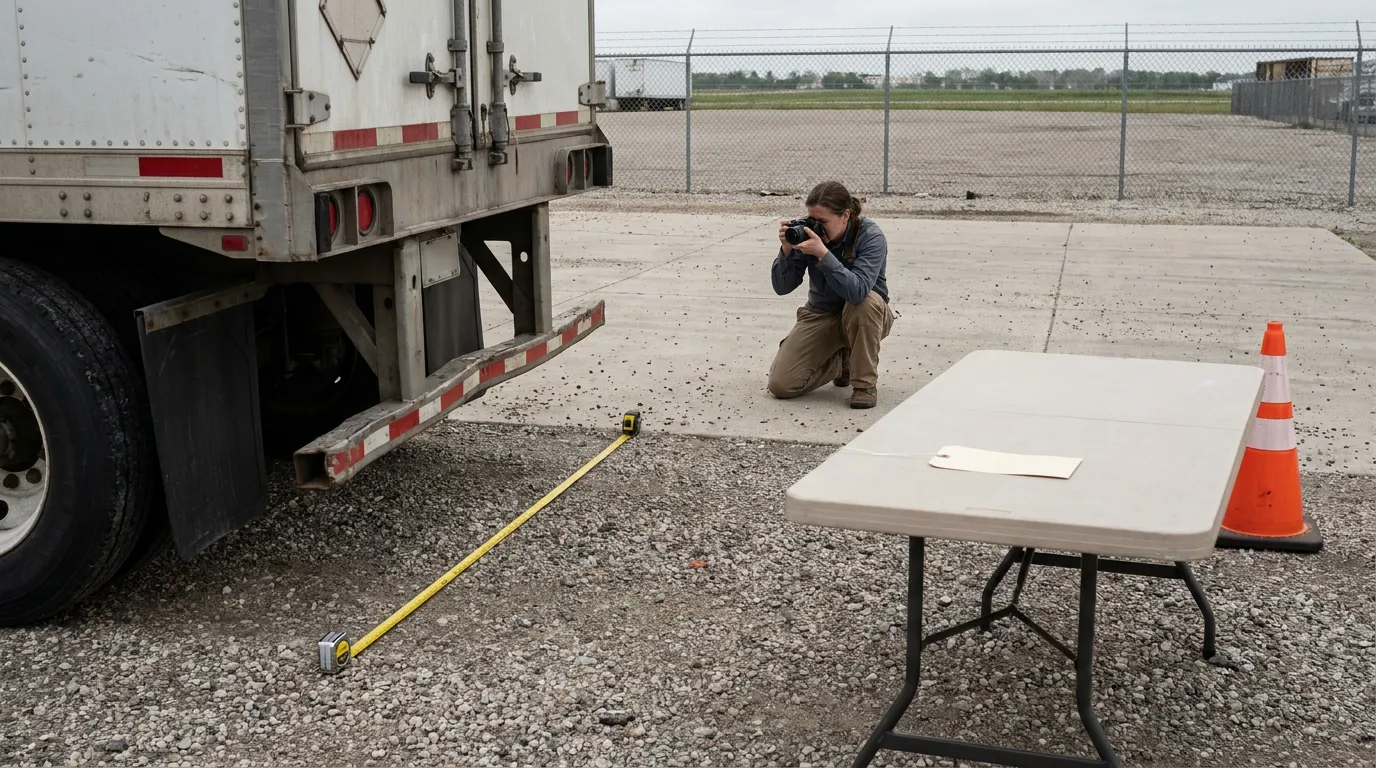
A rear underride guard is meant to stop a car from sliding under a trailer. The guard is the steel bar hanging below the back of most semi-trailers. When it works, it can absorb crash forces and keep the car’s safety systems in play. When it bends, breaks off, or sits too high, the results can be catastrophic or fatal.
Federal safety standards set the minimum for these guards. The National Highway Traffic Safety Administration regulates rear impact guards under Federal Motor Vehicle Safety Standards No. 223 and No. 224, found at 49 C.F.R. §§ 571.223 and 571.224. These rules cover guard height, width, and strength. Federal regulators continue to examine underride protection, including in FMCSA’s underride rulemaking docket.
Common Types of Defective Underride Guard Claims
Most claims involving a defective guard fit categories that Florida product liability law recognizes:
- Trailer design defect: The design may be unreasonably dangerous, for example too weak at the outer edges or mounted too high.
- Manufacturing defect: The guard on a particular trailer may differ from its intended design, such as poor welds or weak bolts.
- Failure to warn: The manufacturer may have failed to give adequate warnings or inspection guidance about how the guard can fail.
- Manufacturer negligence: The company may not have used reasonable care in designing, testing, or building the guard.
Other Parties Who May Share Responsibility
The manufacturer may not be the only defendant. A motor carrier that skipped inspections, a maintenance shop that installed a damaged guard, or a driver who stopped without lights may each share fault. To learn more about who may be liable after a truck crash, it helps to look at every party involved with the trailer.
How Florida’s Regulatory Compliance Presumptions Work
Florida law ties a manufacturer’s liability partly to whether the product met mandatory safety standards. Under Fla. Stat. § 768.1256, set out in Florida’s tort statutes in Chapter 768, the court may start from a rebuttable presumption in either direction, depending on whether the product met the government standards in effect when it was sold.
| Situation at Time of Sale | Presumption Under Fla. Stat. § 768.1256 | What It Means for Victims |
|---|---|---|
| Guard complied with mandatory federal or state standards designed to prevent the harm | Product is presumed not defective, and the manufacturer is presumed not liable | The presumption can be challenged with evidence, but it may raise the bar |
| Guard did not comply with mandatory standards designed to prevent the harm | Product is presumed defective or unreasonably dangerous, and the manufacturer is presumed liable | Proof of non-compliance can be a powerful starting point |
A "rebuttable" presumption is not the final word. Even when a guard technically met the federal minimum, a plaintiff may be able to rebut the presumption with engineering evidence showing the design was still unreasonably dangerous. Likewise, a manufacturer can try to rebut a presumption of defect. Courts look at these questions case by case, and the result can turn on testing data and crash reconstruction.
💡 Pro Tip: Ask your attorney to identify the trailer’s VIN and manufacture date early. Compliance is generally measured as of the date that specific unit was sold, so knowing the date helps show which version of the federal standard applied.
Proving a Product Liability Truck Crash Claim in Broward County
Winning a product liability truck crash claim generally takes evidence that is preserved quickly and analyzed carefully. Trailers are often repaired, sold, or scrapped soon after a crash. When the guard is lost, it becomes much harder to show what failed and why.
Evidence That Can Make or Break Your Case
The physical trailer and its guard are often the most important evidence. An attorney may send preservation letters to the motor carrier, its insurer, and any towing or storage yard. Other key evidence may include:
- Engine control module (black box) and ELD data from the tractor
- Maintenance, inspection, and repair records for the trailer and guard
- FMCSA compliance records and roadside inspection reports
- Crash scene photographs, police reports, and witness statements
- Manufacturer design documents, testing data, and certification labels
Defendants and their insurers often move fast to control the story. Trucking insurers may send investigators to the scene within hours. Victims and families benefit from having someone working just as quickly.
How Comparative Fault Affects a Truck Underride Guard Accident Claim
Florida’s modified comparative fault rule can reduce or bar your recovery. Under Fla. Stat. § 768.81(6), any party found to be more than 50 percent at fault for their own harm generally may not recover damages in a negligence action covered by that section. In a rear underride crash, defendants often argue that the car’s driver was following too closely or not paying attention.
When the injured person is 50 percent or less at fault, damages are generally reduced by that percentage. Under Fla. Stat. § 768.81(3), Florida courts apportion damages among the parties based on each one’s share of fault. Historic cases such as Walt Disney World Co. v. Wood, 515 So. 2d 198 (Fla. 1987), show how Florida courts previously divided fault, though the Legislature has since abolished joint and several liability, meaning each defendant is generally responsible only for their own percentage. A strong case may also show that a properly built guard would have prevented or lessened the injuries even if the driver made a mistake.
💡 Pro Tip: Avoid giving recorded statements to any trucking or manufacturer insurer before speaking with counsel. Casual remarks about speed or distraction may later be used to push your share of fault past 50 percent.
Filing Deadlines for a Florida Truck Accident Claim
Strict deadlines generally apply to Florida truck accident claims, and missing one can end your case. After Florida’s 2023 tort reform, Fla. Stat. § 95.11(4)(a) generally requires that negligence actions be filed within two years. If the crash was fatal, Fla. Stat. § 95.11(4)(d) generally requires that a wrongful death action be filed within two years as well.
Product liability claims can involve different time limits. Fla. Stat. § 95.11 sets separate periods for certain product liability actions, and Fla. Stat. § 95.031 contains rules on when the clock starts, along with a statute of repose that can bar some product claims based on the product’s age. Exceptions and tolling are applied narrowly, so do not count on one to save a late claim.
Claims Involving Government Vehicles
Different rules may apply if a Broward County or Fort Lauderdale public agency vehicle was involved. Under Fla. Stat. § 768.28(14), negligence claims against the state or its agencies or subdivisions are generally barred unless the lawsuit is filed within four years after the claim accrues. Separate pre-suit written notice requirements and damage caps under § 768.28 may also apply.
Damages Available After a Broward County Underride Crash
Victims may be able to recover compensation for both financial and personal losses. Depending on the facts, damages may include medical expenses, lost wages, loss of future earning capacity, pain and suffering, and long-term care costs for catastrophic injuries such as traumatic brain or spinal cord injuries. In fatal cases, Florida’s Wrongful Death Act, Fla. Stat. §§ 768.16, 768.26, sets out which survivors and the estate may recover and what damages are allowed.
The amount of any recovery generally depends on the specific facts, the evidence, and how fault is apportioned. Defective truck equipment cases often require engineering analysis and accident reconstruction.
Frequently Asked Questions
1. Can I sue a trailer manufacturer if the truck driver also caused the crash?
Generally, yes. Florida law allows fault to be divided among several parties under Fla. Stat. § 768.81, so a manufacturer and a negligent driver or carrier may each be held responsible for their share.
2. What if the underride guard met federal standards?
Under Fla. Stat. § 768.1256, compliance creates a rebuttable presumption that the product was not defective. In some cases, engineering evidence may be used to rebut that presumption.
3. How long do I have to file an underride crash lawsuit in Florida?
Negligence and wrongful death claims generally must be filed within two years under Fla. Stat. § 95.11(4). Product liability claims and claims against government entities may follow different rules, so a prompt legal review is important.
4. What if I rear-ended the trailer?
You may still have a claim. Under Fla. Stat. § 768.81(6), you are generally barred from recovery only if you are found more than 50 percent at fault, and a failed guard may have made your injuries much worse.
5. Why does evidence preservation matter so much?
The trailer, the guard, and electronic data may be repaired, overwritten, or destroyed. Prompt preservation demands can help keep this evidence available.
Holding Manufacturers Accountable in South Florida
A truck underride guard accident may involve more than one wrongdoer, and the trailer manufacturer may be among them. Florida law gives victims tools to pursue trailer manufacturer liability, including the presumption of defect under Fla. Stat. § 768.1256 when a guard did not meet mandatory standards. Those tools come with real limits, including comparative fault rules, compliance defenses, and strict filing deadlines. Working with a Fort Lauderdale product liability attorney can help you understand where your claim stands.
Time and evidence are often not on your side after a catastrophic trailer crash. HL Law Group, P.A. is trusted by South Florida clients for clear, practical guidance on complex truck accident and product liability claims. Call (954) 713-1212 or request your free case evaluation to talk about your options with our Fort Lauderdale team.
Disclaimer: This content is for informational purposes only and is not legal advice. Every case is unique, and results may vary. Consult an attorney about your specific circumstances.
Sorry, the comment form is closed at this time.