

18 Nov What Is Motorcycle Accident Reconstruction and How Does It Prove Fault?
How Crash Science Can Decide a Fort Lauderdale Motorcycle Claim
Key Takeaways: Motorcycle accident reconstruction uses physics, engineering, and physical evidence such as skid marks, debris, vehicle damage, and electronic data to estimate speeds, impact angles, and what each driver did before a crash. It can help prove fault by replacing "biker bias" and insurers’ guesses with measurements that can test, confirm, or contradict witness statements and police reports. Florida uses modified comparative negligence for most negligence cases, so a rider found more than 50 percent at fault generally recovers nothing. To be admitted in court, reconstruction testimony must meet Florida’s reliability standard under section 90.702, so evidence needs to be preserved early. Most negligence claims arising after March 24, 2023 must be filed within two years, and claims against government entities have extra notice requirements.
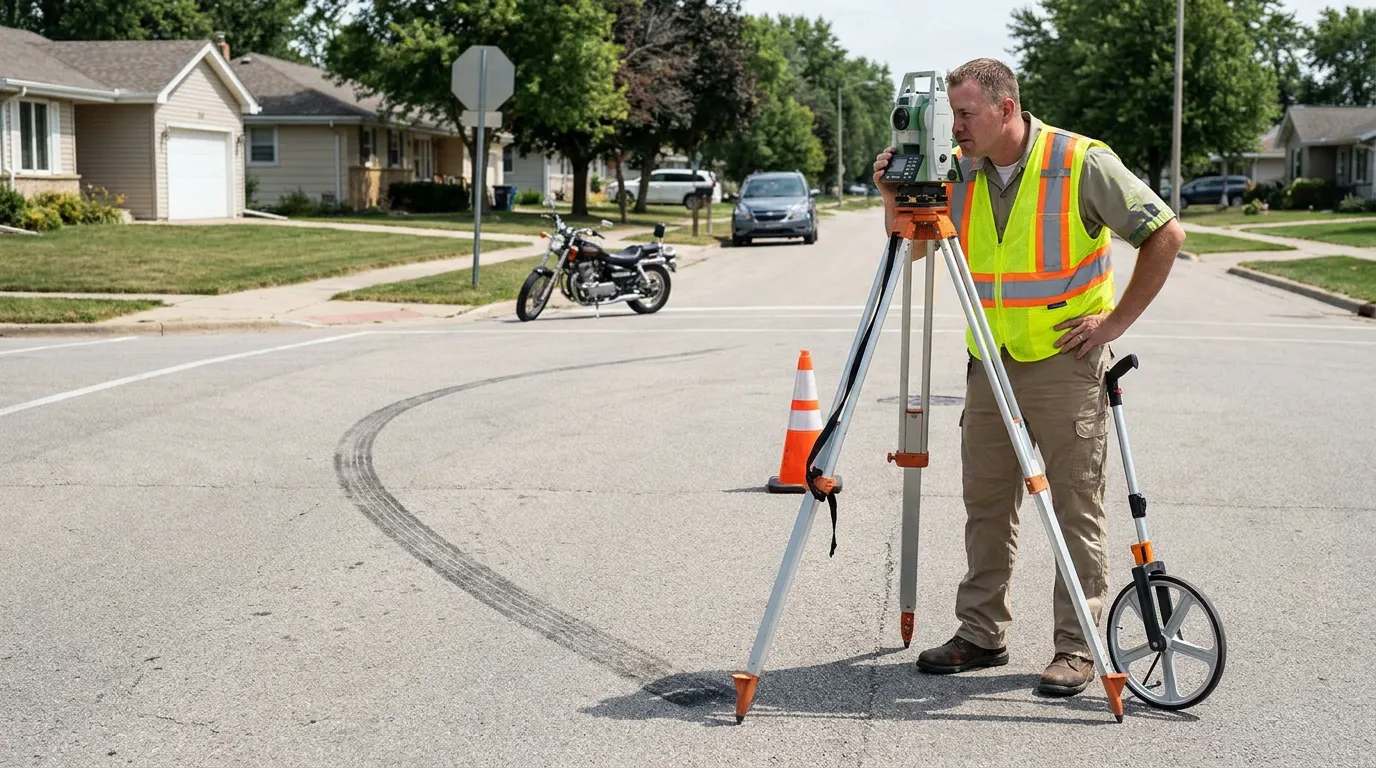
Motorcycle accident reconstruction uses physics, engineering, and physical evidence to show how a crash happened and who caused it. A qualified reconstructionist studies skid marks, debris, vehicle damage, and electronic data to estimate speeds, impact angles, and what each driver did in the seconds before the crash. For an injured rider in Fort Lauderdale, this work can turn an insurer’s guesses into measured facts, and it can be one of the strongest ways to prove fault when the other side blames the rider.
If you or someone you love was hurt in a crash on a Broward County road, act quickly. Key evidence may disappear within days. The legal team at HL Law Group, P.A. helps injured riders across South Florida build claims based on evidence. Call (954) 713-1212 or contact us now for a free consultation about your case.
Why Riders Face Extra Hurdles After a Crash
Motorcyclists often face "biker bias" from insurance adjusters, witnesses, and sometimes jurors. Many people assume a rider was speeding or weaving through traffic, even when a car driver turned left across the motorcycle’s path. These assumptions can shape police reports and early settlement offers. Reconstruction can replace assumptions with math.
Physical Evidence Disappears Fast
Skid marks fade, crews sweep away debris, and owners repair damaged vehicles or sell them for salvage. Once that evidence is gone, rebuilding the crash becomes much harder. South Florida’s frequent rain can quickly wash out tire marks and other scene evidence.
Why the Rider’s Story Alone May Not Be Enough
An injured rider’s account is evidence, but insurers often dismiss it as self-serving. Eyewitnesses may have seen only part of the crash. Physical evidence analyzed with accepted methods often carries more weight because it does not depend on memory or point of view.
How Motorcycle Accident Reconstruction Works
Reconstruction turns physical evidence into estimates of speed, path, and impact angle. Published research on impact models for modern motorcycle crashes describes physics-based models that help analysts calculate what happened in a collision. These models account for how motorcycles behave differently than cars, including rider ejection and lighter weight.
The Evidence Reconstructionists Use
A thorough analysis usually draws on several types of information. Common sources include:
- Scene measurements, skid marks, gouge marks, and debris locations
- Event data recorder downloads from the other vehicle
- Photos, surveillance footage, and GoPro or dashcam recordings
- Crush damage on the motorcycle and the other vehicle
- Rider movement, including where the rider landed
- Traffic signal timing and sight-line measurements at the intersection
With this data, the analyst can test whether witness statements and police conclusions match the physical evidence. A driver may claim the motorcycle "came out of nowhere," but sight-line and speed calculations may show the rider was visible for several seconds. Learn more about how left-turn crash cases are built in Fort Lauderdale.
Common Techniques and What They Show
Each method answers a different question about the crash.
| Technique | What It Can Help Show |
|---|---|
| Speed calculations | Approximate speed of each vehicle before impact |
| Crush analysis | Force and direction of the collision |
| Perception-reaction analysis | Whether a driver had time to see and avoid the rider |
| Computer simulation | A visual, data-based model of the crash |
| Electronic data review | Braking, throttle, and speed recorded by vehicle modules |
💡 Pro Tip: If you had a helmet camera or dashcam running, do not delete, edit, or upload the footage. Save the original file and memory card so experts can confirm it was not altered.
Proving Fault Under Florida Negligence Law
To recover compensation, an injured rider generally must prove the four elements of negligence: duty, breach, causation, and damages. Reconstruction most often helps prove breach and causation by showing what the at-fault driver did wrong and how that caused the crash.
Why a Few Percentage Points Matter
Florida follows modified comparative negligence under section 768.81(6), Florida Statutes. Under this rule, a claimant found more than 50 percent at fault for his or her own harm generally cannot recover any damages. The rule does not apply to medical negligence cases. If a jury finds a rider 49 percent at fault, the award would generally be cut by 49 percent. At 51 percent, the rider generally recovers nothing. Reconstruction evidence that shifts fault even slightly can decide whether a rider recovers anything.
The full text of Florida’s comparative fault rules appears in Chapter 768 of the Florida Statutes. Under section 768.81(3), courts generally enter judgment against each party based on its own share of fault. Exceptions exist, such as certain intentional torts and cases where one party is legally responsible for another’s conduct. Reconstruction can help divide fault among several parties, such as a car driver, a commercial truck driver, or a road maintenance contractor. A defendant that blames someone who is not a party to the lawsuit generally must raise that claim in its court filings and prove it at trial by a preponderance of the evidence.
Responding to Alcohol and Defective Part Defenses
Insurers sometimes raise Florida’s alcohol and drug defense under section 768.36(2), Florida Statutes. That law bars recovery if the plaintiff was impaired to the point that normal faculties were affected, or had a blood or breath alcohol level of 0.08 or higher, and, as a result, was more than 50 percent at fault for his or her own harm. The defense requires both impairment and that causal link. Reconstruction may show the other driver caused the crash regardless of any claimed impairment.
Defective equipment raises separate questions. In a products liability claim, such as one involving faulty brakes or a failed helmet, section 768.81(3)(b) tells the jury to consider the fault of everyone who contributed to the accident when dividing damages. Reconstruction can help separate what caused the crash from what made the injuries worse.
What Florida’s Evidence Code Requires From Reconstruction Testimony
Reconstruction opinions must meet Florida’s reliability standard under section 90.702, Florida Statutes. A witness qualified by knowledge, skill, experience, training, or education may offer an opinion if it will help the jury, rests on enough facts or data, uses reliable methods, and applies them reliably to the case. These rules appear in Florida’s Evidence Code.
Section 90.704 lets a reconstructionist rely on the kind of data experts in the field reasonably rely on, even if that data is not itself admissible. However, the side offering the expert may not show inadmissible data to the jury unless the court finds that its value in helping the jury weigh the opinion clearly outweighs its unfair harm.
Eyewitnesses still matter, but their opinions are limited. Under section 90.701, lay witnesses may offer opinions only when those opinions do not require special knowledge, skill, experience, or training. Conclusions about exact impact speed or reaction time are generally left to qualified experts.
The other side may challenge the basis of an opinion before the expert gives it. Under section 90.705(2), if the opponent makes an initial showing that the expert lacks a sufficient basis, the court will exclude the opinion unless the offering side proves the underlying facts. This is why saving the motorcycle, scene photos, and debris evidence early matters so much.
Deadlines That Can Affect Your Florida Motorcycle Accident Claim
For most negligence claims arising after March 24, 2023, section 95.11(4)(a), Florida Statutes, generally gives you two years to file suit. Claims arising earlier generally have four years. Wrongful death claims and claims against government entities follow different rules. Claims against Florida cities, counties, or state agencies generally require written notice under section 768.28(6), usually within three years after the claim arises and before filing suit. Exceptions that extend deadlines apply only in limited cases, and courts generally read them narrowly.
💡 Pro Tip: If a road defect, missing sign, or broken signal may have contributed to your crash, tell your lawyer early. Government notice rules can add steps beyond an ordinary lawsuit.
Frequently Asked Questions
1. Does every motorcycle crash case need reconstruction?
No. Reconstruction may become important when fault is disputed, injuries are severe, or the insurer blames the rider. The decision generally depends on the facts and the strength of other evidence.
2. Can reconstruction help if I was not wearing a helmet?
Florida law allows riders 21 and older to ride without a helmet if they carry at least $10,000 in medical benefits coverage for motorcycle crash injuries. An insurer may argue that not wearing a helmet made the injuries worse and try to reduce damages. Reconstruction may still help show who caused the crash, since fault and the extent of injuries are often analyzed separately.
3. How soon should evidence be preserved?
As soon as possible. Skid marks, debris, and electronic vehicle data can be lost within days. Your lawyer may send letters asking other parties to keep evidence they hold.
4. Can a police report be challenged?
Yes, in many cases. Officers often arrive after the crash and rely on statements from those involved. Under Florida’s crash report privilege, statements drivers make to officers for the crash report generally cannot be used at trial. Reconstruction may confirm or contradict the report’s conclusions using physical evidence.
Turning Physical Evidence Into a Fair Recovery
Motorcycle accident reconstruction gives injured riders a science-based way to answer the question insurers care about most: who caused the crash? Under Florida’s modified comparative negligence rule, a small shift in fault can decide whether you recover. Saving evidence early, meeting legal deadlines, and presenting reliable testimony can strengthen your claim, though every outcome depends on its facts. Working with an experienced motorcycle accident reconstruction lawyer can help you protect your rights from the start.
You do not have to face the insurance company alone while you heal. Injured riders throughout Fort Lauderdale, Broward County, and South Florida trust HL Law Group, P.A. Call (954) 713-1212 or schedule your free case evaluation today.
Disclaimer: This content is for informational purposes only and is not legal advice. Every case is unique, and results may vary. Consult a lawyer about your specific situation.
Sorry, the comment form is closed at this time.