

15 Oct Is Texting and Driving a Primary Offense in Florida?
Florida Drivers Can Be Stopped for Texting Alone
Key Takeaways: Yes, texting while driving has been a primary offense in Florida since July 1, 2019, so officers may stop and cite drivers for texting alone under Florida Statute § 316.305. In designated school crossings, school zones, and active work zones, § 316.306 generally bans handheld phone use, including voice calls. Officers must tell drivers they can decline a phone search and may not access a device without a warrant unless the driver consents. In civil injury cases, the other driver’s phone records may still be sought through discovery. A texting citation does not prove liability by itself, but it may support a negligence claim. Under comparative fault rules, you generally cannot recover if you are found more than 50 percent at fault. Most negligence claims arising on or after March 24, 2023, generally must be filed within two years, so acting quickly to preserve evidence matters.
Yes, texting while driving is a primary offense in Florida. Since July 1, 2019, police officers across the state, including in Fort Lauderdale and throughout Broward County, have been able to pull over a driver for texting alone. They no longer need to see a second traffic violation first. If a distracted driver hit you, a texting citation, the officer’s observations, and the phone evidence that may follow can all become important parts of a personal injury claim.
If a driver who was looking at a phone injured you or someone you love, you do not have to handle the insurance companies by yourself. HL Law Group, P.A. helps injured people in Fort Lauderdale and across South Florida pursue the compensation they may be owed. Call (954) 713-1212 or contact us now for a free consultation to talk through your options.
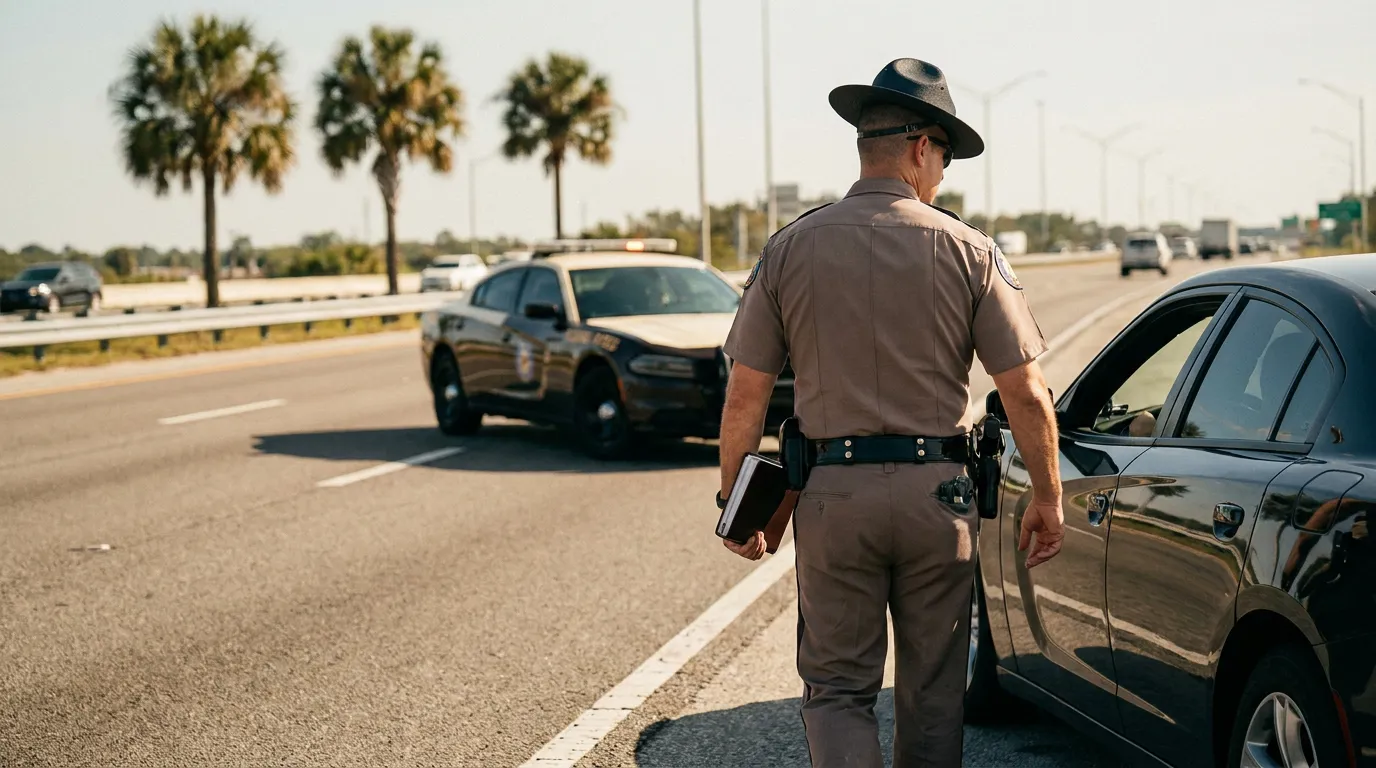
How the Texting and Driving Law Florida Drivers Must Follow Works
Florida’s texting ban comes from Florida Statute § 316.305, known as the "Florida Ban on Texting While Driving Law." Under § 316.305(3)(a), a person may not drive a motor vehicle while manually typing or entering multiple letters, numbers, symbols, or other characters into a wireless communications device. The section also bars sending or reading data on the device for nonvoice interpersonal communication, such as texting, emailing, and instant messaging. The ban applies while the vehicle is in motion, and generally not when it is stationary.
The statute defines "wireless communications device" broadly. It covers any handheld device used or capable of being used in a handheld manner that is designed or intended to receive or transmit text or character-based messages, access or store data, or connect to the Internet or any communications service as defined in § 812.15, and that allows text communications. In practice, this generally includes smartphones, tablets, and similar devices. You can read the full text of the Florida Statutes Chapter 316 traffic provisions on the Florida Senate’s website.
What the Law Does Not Prohibit
The texting ban has several exceptions, and they can affect how a crash is investigated. Under § 316.305(3)(b), the prohibition generally does not apply to a driver who is:
- Reporting an emergency or criminal or suspicious activity to law enforcement authorities
- Using a device or system for navigation purposes
- Conducting wireless communication that does not require manual entry of multiple letters, numbers, or symbols, except to activate, deactivate, or initiate a feature or function
- Operating under other limited exceptions listed in the statute, such as a stationary vehicle, emergency or law enforcement duties, safety-related messages, or radio broadcasts
At-fault drivers sometimes rely on these exceptions to explain why they were on their phones. A driver might say they were only checking GPS directions or using voice-to-text. Whether an exception applies depends on the facts. Phone records, witness accounts, and crash reconstruction may help show what the driver was really doing.
Why Primary Offense Status Changed Enforcement
Before July 1, 2019, texting while driving in Florida was only a secondary offense. An officer could cite a driver for texting only after stopping them for something else, such as speeding. The Florida Legislature changed this with the bill tracked on the Florida House bill history page. The bill amended § 316.305 to make texting while driving a primary offense and created § 316.306, the school zone and work zone handheld rule. For the first several months, officers could only give warnings. Citations for texting began January 1, 2020.
Safety research generally supports primary enforcement. National Highway Traffic Safety Administration (NHTSA) research indicates that primary enforcement laws tend to produce greater compliance and larger reductions in handheld phone use than secondary enforcement laws.
Primary vs. Secondary Enforcement at a Glance
| Feature | Secondary Offense (Before July 1, 2019) | Primary Offense (Current Florida Law) |
|---|---|---|
| Can police stop a driver for texting alone? | No | Yes |
| Another violation required first? | Yes | No |
| Statutory basis | Fla. Stat. § 316.305 (prior version) | Fla. Stat. § 316.305 (as amended) |
| Applies in Fort Lauderdale and Broward County? | Yes | Yes |
Handheld Phone Rules in School Zones and Work Zones
In certain areas, Florida law goes further than the texting ban and generally prohibits handheld phone use. Under Florida Statute § 316.306(3)(a)1., a person may not drive a motor vehicle while using a wireless communications device in a handheld manner in a designated school crossing, school zone, or active work zone area as defined in § 316.003. This covers more than texting; holding the phone to talk is also generally prohibited. Hands-free use, such as voice calls through Bluetooth or a speaker, is still allowed.
This rule also has primary enforcement. Under § 316.306(3)(a)2., officers may stop vehicles and issue citations to drivers who use a wireless device in a handheld manner in these zones. Officers could only issue warnings from October 1, 2019, until citations began January 1, 2020. This matters in South Florida, where school zones and construction projects are common.
💡 Pro Tip: If your crash happened near a school or an active construction zone, write down that detail and take photos of any posted signs. Location may help show that the other driver broke a stricter handheld-use rule.
Driver Privacy Protections and Phone Evidence
Florida’s distracted driving laws include privacy protections that limit what officers can do at a traffic stop. Under §§ 316.305(3)(c) and 316.306(3)(c), an officer must tell the driver of their right to decline a search of their wireless communications device. The officer also may not access the device without a warrant, and may not confiscate it while waiting for a warrant. Phone evidence therefore often has to come from sources other than a roadside search.
When Phone Records May Become Evidence
Section 316.305(3)(d) creates a specific evidence rule for crashes involving death or personal injury. Under this provision, a user’s billing records for a wireless communications device, or testimony or written statements from the appropriate authorities who received the messages, may be admissible only when a crash resulted in death or personal injury. That provision applies to proceedings that decide whether the texting statute was violated.
Civil personal injury cases are separate from traffic citation proceedings. In a lawsuit, an injured person’s attorney may seek the at-fault driver’s phone records through civil discovery, subject to the Florida Rules of Civil Procedure and court oversight. Courts may weigh privacy concerns and relevance and limit what must be produced. Acting quickly matters because carriers may not keep records for long.
Penalties for Violating the Texting Ban
Under § 316.305(4), a first violation is generally a noncriminal traffic infraction, punishable as a nonmoving violation under Chapter 318. A second violation within five years is generally treated as a moving violation and can add points to the driver’s license. Texting violations in a school zone also add points.
How a Texting Violation Can Affect Your Injury Claim
A citation under § 316.305 does not automatically prove that the other driver is liable for your injuries, but it may support your claim. In a Florida negligence case, the injured person generally must prove duty, breach, causation, and damages. Evidence that a driver was texting may help show breach of the duty of reasonable care. Under Florida law, violating a traffic statute is generally treated as evidence of negligence, not negligence per se. A traffic citation itself is generally not admissible in a civil trial, so the underlying facts and phone evidence usually matter more.
Comparative fault rules can also shape what you recover. Under Florida Statute § 768.81(6), as amended in 2023, an injured person found more than 50 percent at fault for their own harm generally may not recover damages in most negligence actions. If you are 50 percent or less at fault, your damages are reduced by your share of fault. Insurers often try to shift blame onto injured people, and strong evidence of the other driver’s phone use may help push back.
Deadlines matter too. For most negligence claims arising on or after March 24, 2023, Florida Statute § 95.11(4)(a) generally sets a two-year statute of limitations. Claims that arose before that date generally had four years. Wrongful death claims and claims against government entities have their own rules, and government claims require advance notice under § 768.28. A texting and driving law Florida lawyer can help you identify the deadlines that may apply to you.
💡 Pro Tip: Ask for a copy of the crash report as soon as it is available, and check whether the officer noted phone use, a citation, or witness statements. Mistakes or omissions are easier to address early.
Steps to Take After a Fort Lauderdale Distracted Driving Crash
What you do in the days after a crash can affect the evidence available later. Get medical care first, even if your injuries seem minor. Under § 627.736, Florida’s no-fault law generally requires initial medical treatment within 14 days to receive personal injury protection (PIP) benefits. Then keep records of everything, including medical bills, missed work, and conversations with insurers.
Be careful when talking to the other driver’s insurance company. Adjusters may ask for recorded statements or broad authorizations to access your medical records. In many cases, it is wise to get legal guidance before agreeing to either. You can find more on Fort Lauderdale distracted driving issues on our resource page.
Frequently Asked Questions
1. Is texting and driving a primary offense in Florida?
Yes. Since July 1, 2019, Florida Statute § 316.305 has allowed officers to stop drivers for texting alone. Citations began January 1, 2020, after a warning period.
2. Can I talk on a handheld phone while driving in Florida?
In most areas, Florida’s texting ban does not prohibit handheld voice calls. However, § 316.306(3)(a) prohibits handheld device use in designated school crossings, school zones, and active work zones. Hands-free use is still allowed there.
3. Can police search my phone during a traffic stop?
Generally, no, not without your consent or a warrant. Under §§ 316.305(3)(c) and 316.306(3)(c), officers must tell drivers they can decline a search and may not access the device without a warrant.
4. Does a texting citation prove the other driver caused my crash?
Not automatically. Evidence of texting may help show negligence, but you generally must still prove causation and damages. The citation is usually not admissible in a civil trial, and comparative fault arguments may come into play.
5. How long do I have to file a claim after a texting-related crash?
For most negligence claims arising on or after March 24, 2023, Florida Statute § 95.11(4)(a) generally allows two years. Claims against government entities may involve separate notice requirements.
Holding Distracted Drivers Accountable in South Florida
Florida treats texting while driving as a primary offense, so officers may stop and cite drivers for texting alone. The texting and driving law Florida enforces under § 316.305, along with the stricter handheld rules in school and work zones under § 316.306, may give injured people important tools when another driver’s phone use caused a crash. Still, phone evidence, exceptions, comparative fault, and filing deadlines can make these cases complicated, and every case depends on its own facts.
If a distracted driver injured you in Fort Lauderdale or anywhere in Broward County, you can get guidance now. HL Law Group, P.A. can help you preserve evidence, deal with insurers, and pursue the compensation you may be entitled to. Call (954) 713-1212 or schedule your free case evaluation today.
Disclaimer: This content is for informational purposes only and is not legal advice. Every case is unique, and results may vary. Consult an attorney about your specific circumstances.
Sorry, the comment form is closed at this time.