

01 Oct What Is the FMCSA 32-Hour Post-Accident Drug Testing Rule in Florida?
The Testing Clock That Starts Ticking the Moment a Truck Crash Happens
Key Takeaways: Under 49 CFR § 382.303, motor carriers must drug test a surviving commercial driver after an applicable crash, ceasing attempts after 32 hours for controlled substances and 8 hours for alcohol. If testing is not completed within these timeframes, carriers must document why in writing. Testing is required after a fatality regardless of citation, but in injury or tow-away crashes only when the driver receives a citation for a moving violation. Florida’s Fla. Stat. § 322.63 applies to both Florida CDL holders and out-of-state drivers operating commercially in the state. Testing records, chain-of-custody forms, and ELD data can become powerful truck accident evidence but are rarely produced voluntarily.
Federal law gives motor carriers a narrow window to drug test a commercial driver after a serious crash: 32 hours for controlled substances and 8 hours for alcohol. Under 49 CFR § 382.303, carriers must test surviving commercial motor vehicle drivers following an applicable accident. If testing is not completed within these timeframes, the employer must document in writing why the test was not promptly given. For families dealing with a Fort Lauderdale truck crash, this short window often determines whether critical truck accident evidence gets created.
If you or a loved one was hurt in a collision with a tractor-trailer, box truck, or delivery vehicle in Broward County, the team at HL Law Group, P.A. can move quickly to preserve testing records and carrier files. Call (954) 713-1212 or request your free case evaluation today.
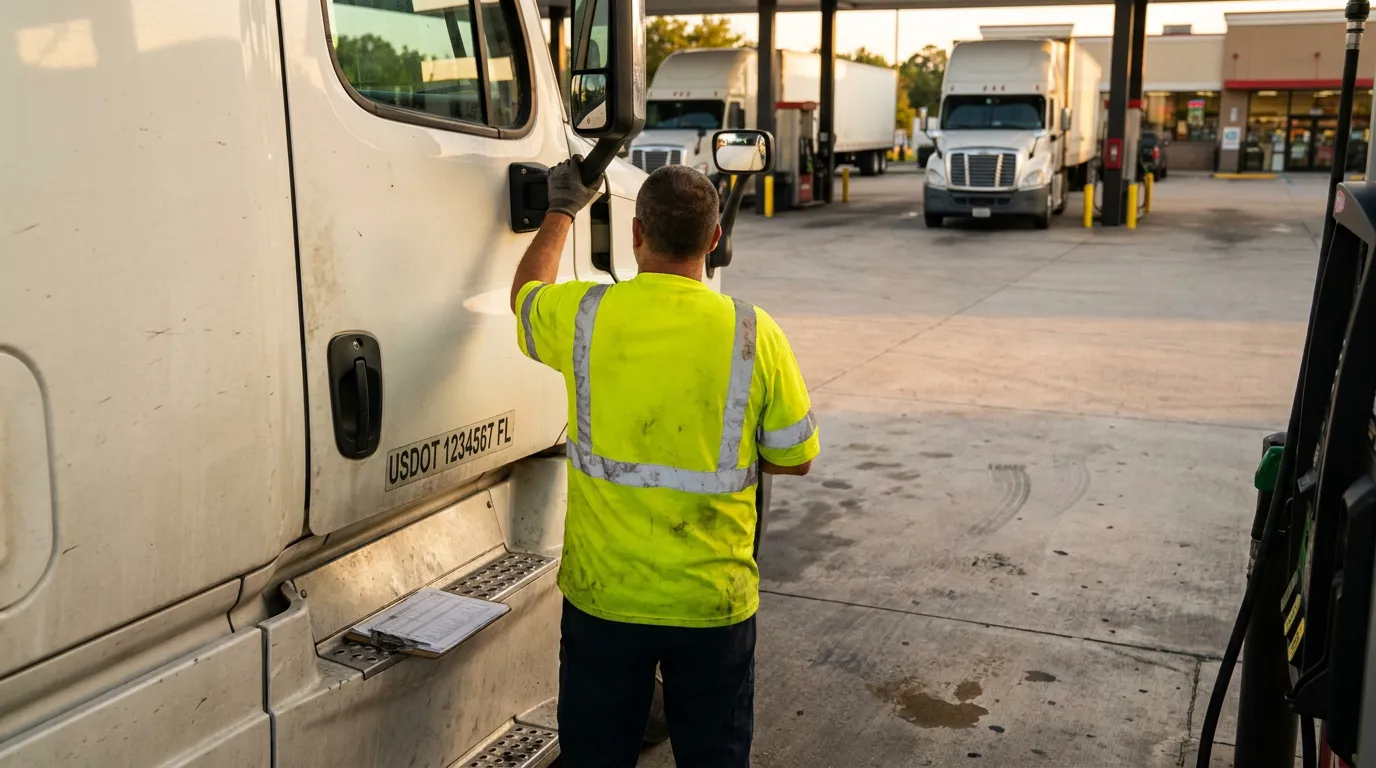
When Truck Driver Post-Accident Drug Testing Is Required
Post-accident testing triggers depend on crash severity and whether a citation is issued. The Federal Motor Carrier Safety Administration’s drug and alcohol testing program requires testing for both alcohol and controlled substances after an applicable accident on a public road in commerce.
| Crash Circumstance | Alcohol Test | Controlled Substances Test |
|---|---|---|
| Fatality | Generally required regardless of citation | Generally required regardless of citation |
| Bodily injury with immediate medical treatment away from the scene | Generally required if driver cited within 8 hours | Generally required if driver cited within 32 hours |
| Disabling damage requiring tow-away | Generally required if driver cited within 8 hours | Generally required if driver cited within 32 hours |
The fatality trigger operates independently of any citation. FMCSA rules require post-accident testing of the surviving driver in the event of a human fatality, meaning carriers cannot avoid this obligation even if law enforcement declined to write a ticket. In injury and tow-away crashes, a citation issued to the CMV driver under state or local law for a moving violation typically activates the testing obligation.
Why the 32-Hour and 8-Hour Windows Differ
Alcohol metabolizes far faster than most controlled substances, explaining the shorter timeline. Federal rules direct that alcohol tests be given within two hours, require written records explaining any delay beyond two hours, and bar further attempts after 8 hours. Controlled substances testing carries the 32-hour outer limit with parallel documentation requirements. Delayed tests may still be probative, but their evidentiary weight may be contested.
How Post-Accident Testing Fits Into Federal Trucking Regulations
The FMCSA 32-hour drug test is one piece of a six-category testing framework applying to safety-sensitive CDL drivers. Those categories are pre-employment, post-accident, random, reasonable suspicion, return-to-duty, and follow-up testing. Each category is mandatory when its conditions are met, so motor carriers must have written post-accident procedures, trained supervisors, and designated collection sites arranged before a crash occurs.
A carrier’s failure to have these systems in place can itself become an issue in a truck accident claim. When a company cannot explain why a driver was never tested, or produces a vague post-hoc memo instead of a contemporaneous record, that gap may support arguments about negligent supervision or inadequate compliance. Testing procedures are governed by DOT Part 40 collection rules, which dictate chain of custody, specimen handling, and Medical Review Officer review.
What Happens After a Positive Test or Refusal
Positive results and refusals must be reported to the FMCSA Drug and Alcohol Clearinghouse, and the driver is typically removed from safety-sensitive functions. That driver generally cannot return to duty until completing the Substance Abuse Professional evaluation and return-to-duty testing process. Clearinghouse entries, prior violations, and a carrier’s hiring decisions can become significant when evaluating whether the company should have put that driver behind the wheel.
💡 Pro Tip: A refusal to test is generally treated the same as a positive result under federal rules. If a carrier’s records show a refusal, that fact may carry meaningful evidentiary value even without a confirmed laboratory result.
Florida’s Implied Consent Law for Commercial Drivers
Florida layers its own testing framework on top of federal rules through its implied consent statute. Under Fla. Stat. § 322.63(1), a person operating a commercial motor vehicle in Florida is deemed to have consented to an approved chemical or physical test of blood or breath for alcohol concentration, and to a urine test for detecting chemical or controlled substances.
The statute’s reach extends beyond Florida CDL holders. Under Fla. Stat. § 322.63(1)(a)-(b), both CDL applicants and holders, and drivers who operate a commercial vehicle in the state without a Florida CDL, are deemed to have expressed consent. An out-of-state driver hauling freight down I-95 through Fort Lauderdale is subject to the same consent framework as a local Broward County operator.
The Reasonable Cause Requirement and Test Types
State-authorized testing requires an officer to have reasonable cause. Fla. Stat. § 322.63(2) permits testing, incident to a lawful stop or arrest, where an officer has reasonable cause to believe that a person driving a commercial motor vehicle has any alcohol, chemical substance, or controlled substance in his or her body. This is a meaningful limitation and one reason federal carrier-initiated testing and state law enforcement testing sometimes produce different records.
The statute also indicates that one test does not substitute for another. Administering one type of test does not preclude another, but a urine test may not be used to determine alcohol concentration and a breath test may not be used to determine the presence of controlled or chemical substances.
Testing When the Truck Driver Is Injured or Hospitalized
Florida law addresses the scenario in which a commercial driver is too injured to consent or refuse. Under Fla. Stat. § 322.63(2)(c), a person who appears for treatment at a hospital as a result of involvement as a commercial motor vehicle driver in a crash, and who is incapable of refusal by reason of unconsciousness or other incapacity, is deemed not to have withdrawn consent to a blood test. Hospital blood draws in these circumstances can become central to reconstructing what happened.
Medical records generated after a crash are perishable. Facilities discard specimens on their own schedules, and hospital toxicology screens are not always performed to DOT standards. Acting quickly to identify what was drawn, where, and when is one reason an experienced truck driver post-accident drug testing lawyer should be involved early in a serious South Florida trucking case.
Turning Testing Records Into Truck Accident Evidence
Post-accident testing records rarely arrive voluntarily, and injured claimants must take affirmative steps to secure them. Carriers are not obligated to hand over internal files voluntarily, and the most revealing record is sometimes the written explanation of why no test occurred. These records must be furnished to FMCSA on request, creating a paper trail worth pursuing through discovery.
Several categories of documentation commonly matter:
- DOT chain-of-custody form and laboratory result for controlled substances test
- Evidential breath testing records and alcohol technician’s log
- Carrier’s written explanation if testing occurred outside required window
- Clearinghouse queries the employer ran before and during driver’s employment
- Dispatch and ELD data showing hours worked before the crash
- Hospital records reflecting any blood draw performed under Florida’s implied consent law
Florida law builds strict deadlines into the state process when a license suspension is issued. Under Fla. Stat. § 322.2615(2)(a), an officer must forward the driver license, an affidavit of grounds, and test results within 5 days after issuing notice of suspension. These administrative proceedings are distinct from civil personal injury lawsuits but can generate useful documents, which is one reason careful attention to the evidence truck accident attorneys collect matters.
💡 Pro Tip: Send a written preservation letter to the motor carrier as soon as possible after a serious crash. A timely spoliation notice may support arguments about missing testing records later.
Frequently Asked Questions
1. Does a truck driver have to be tested after every accident in Florida?
No. Testing is required after a crash involving a human fatality regardless of citation, and after injury or tow-away crashes only if the CMV driver receives a citation for a moving violation arising from the crash.
2. What if the commercial driver drug test happened after 32 hours?
The carrier must document in writing why the test was not promptly administered. Under 49 CFR § 382.303(d)(2), the employer must cease attempts after 32 hours and maintain that written record. A late test may still be relevant, though its weight is fact-dependent.
3. Can I get the results of the driver’s post-accident test?
Generally not without formal legal process. These records are typically confidential under federal law and may be obtained through litigation discovery, subpoenas, or court order.
4. Does a negative drug test mean the trucking company is not liable?
Not necessarily. Negligence in a trucking case can arise from fatigue, speeding, improper maintenance, inadequate training, or hours-of-service violations. Impairment is one theory among many.
5. How soon should I contact a truck accident attorney after a crash?
As quickly as your medical condition allows. Testing windows can close in hours, ELD data may be overwritten, and carriers often begin building their defense immediately. Early involvement may improve the odds of preserving critical records.
Protecting Your Claim Before the Evidence Disappears
The FMCSA 32-hour rule reflects a simple reality: impairment evidence can degrade fast. Between federal post-accident testing requirements under 49 CFR Parts 382 and 40 and Florida’s implied consent provisions in Fla. Stat. § 322.63, substantial documentation may exist after a serious Broward County trucking collision. Whether that documentation is preserved, produced, and properly interpreted often depends on how quickly someone starts asking for it.
If you were seriously injured or lost a family member in a commercial vehicle collision in Fort Lauderdale or anywhere in South Florida, the attorneys at HL Law Group, P.A. in Fort Lauderdale are ready to help you understand your options. Call (954) 713-1212 or schedule your free consultation now to discuss your case.
Disclaimer: This content is for informational purposes only and is not legal advice. Every case is unique, and results may vary. Consult an attorney about your specific circumstances.
Sorry, the comment form is closed at this time.