
27 Sep What Is a Slip and Fall Spoliation Letter in Fort Lauderdale, Florida?
Protecting the Evidence That Can Make or Break Your Broward County Premises Case
Key Takeaways: A slip and fall spoliation letter is a formal written demand directing a property owner, business, or insurer to preserve evidence tied to your fall, including surveillance video, incident reports, inspection logs, and maintenance records. It matters urgently in Fort Lauderdale because commercial camera systems often overwrite footage within days to weeks. That evidence is frequently the only way to satisfy Fla. Stat. § 768.0755, which requires proof that a business had actual or constructive knowledge of a transitory foreign substance. Preserved footage shapes comparative fault under Fla. Stat. § 768.81, where a claimant found more than 50 percent at fault may not recover. If evidence is destroyed, courts may consider discovery sanctions or an adverse inference. With a two-year negligence filing deadline under Fla. Stat. § 95.11(5)(a) for claims accruing on or after March 24, 2023, and evidence often disappearing far sooner, acting within days is the practical priority.
A slip and fall spoliation letter is a formal written demand, usually sent by your attorney to a property owner, business, or its insurer, instructing them to preserve specific evidence related to your fall. In Fort Lauderdale, that typically means surveillance video, incident reports, inspection logs, employee statements, and maintenance records. The letter puts the recipient on notice that this material is relevant to a pending or anticipated claim. Because most retail and restaurant camera systems overwrite footage within days to weeks, timing matters enormously.
If you were injured on someone else’s property in Broward County, the window to protect the evidence may be closing right now. The team at HL Law Group, P.A. handles premises liability claims throughout Fort Lauderdale and South Florida. Call (954) 713-1212 or contact us now for a free, no-obligation case evaluation.
Why Florida’s Notice Requirement Makes Evidence Preservation Urgent
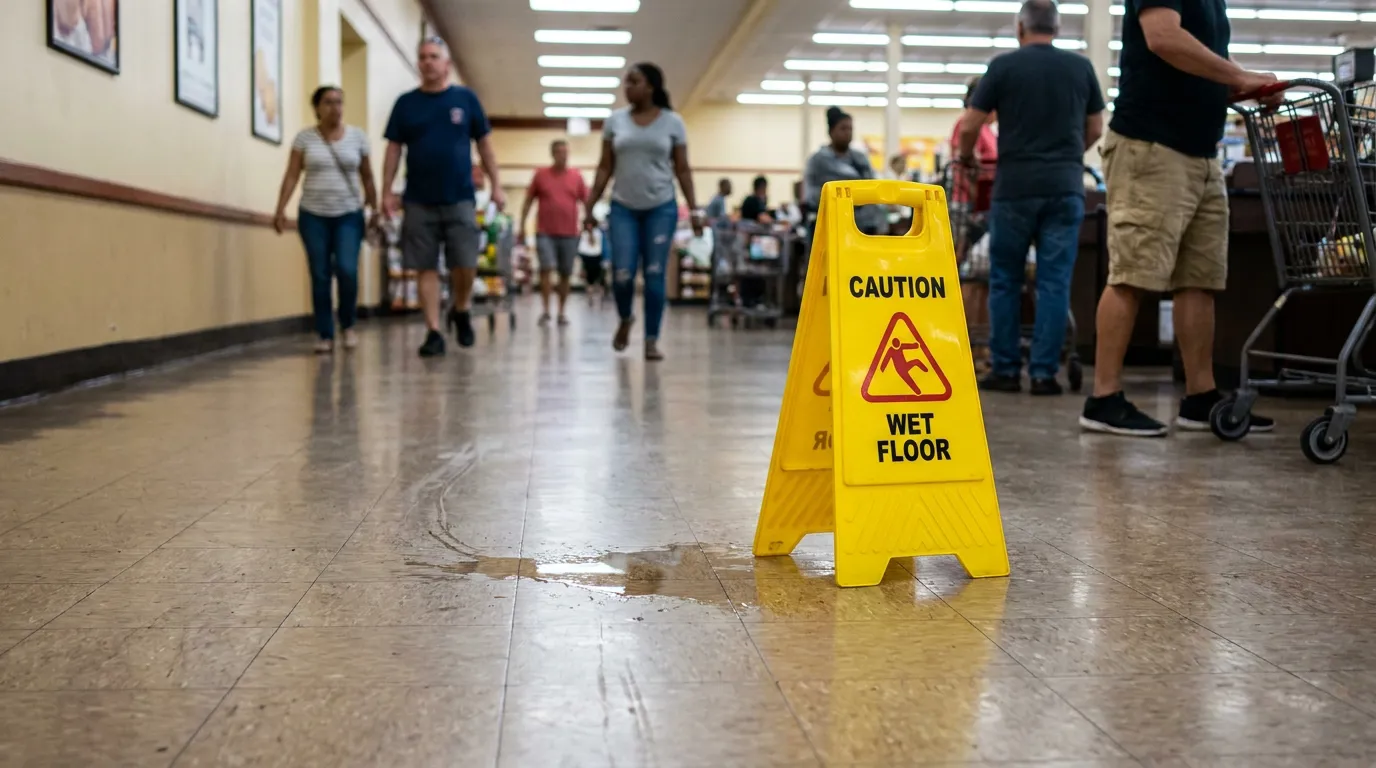
Florida places a demanding evidentiary burden on people who fall inside business establishments. Under Fla. Stat. § 768.0755(1), if a person slips on a transitory foreign substance in a business establishment, the injured person must prove that the business had actual or constructive knowledge of the dangerous condition and should have taken action to remedy it. This statute is limited to transitory foreign substances in business establishments; other falls are analyzed under ordinary premises liability principles.
Constructive knowledge is where preserved evidence becomes decisive. The statute allows constructive knowledge through circumstantial evidence showing the condition existed long enough that the business should have known of it, or that it occurred with regularity and was foreseeable. One reliable way to establish how long a spill existed is timestamped video footage or inspection logs. Florida courts have held that the mere presence of a substance, without evidence of duration or regularity, is insufficient. When that material disappears, claims become substantially harder to prove.
Section 768.0755(2) contains a savings clause stating the section does not affect any common-law duty of care owed by a person or entity in possession or control of a business premises. However, Florida courts have consistently held that this clause does not allow claimants to pursue negligent mode of operation as a viable alternative theory of recovery, as that theory was effectively eliminated when § 768.0755 replaced its predecessor statute in 2010 and omitted the mode of operation language. Claimants must still satisfy the actual or constructive knowledge requirement, and the same preserved records remain central to that showing.
What a Spoliation Notice in Broward County Typically Demands
An effective preservation demand letter is specific. A well-drafted evidence preservation letter in Florida identifies the date, time, and location of the incident and itemizes the material at issue.
Commonly requested items include:
- All surveillance video from cameras viewing the incident area
- Incident and accident reports
- Sweep sheets, inspection logs, and cleaning schedules
- Employee names and written statements
- Work orders, repair records, and janitorial contracts
- Photographs and the physical item or substance involved
- Electronically stored information and internal communications
A preservation letter asks a recipient to retain material; it is not a discovery request and does not compel production. Some items may later be resisted as work product or privileged, with disputes resolved by the court once suit is filed.
💡 Pro Tip: If you can safely do so before leaving the scene, photograph the hazard, the surrounding area, and any visible camera domes. Camera locations noted in your own photos can help your attorney describe exactly which recordings to preserve.
How Quickly Should the Letter Go Out?
Sooner is better. Many commercial video systems in South Florida recycle storage on rolling cycles typically ranging from 30 to 90 days, though some smaller businesses with limited storage may overwrite footage in as little as 7 to 14 days. Once footage is overwritten, recovery is often impossible, which is why counsel frequently sends a spoliation notice within days of being retained.
What Happens If the Business Destroys the Evidence Anyway?
Florida courts have tools to address evidence destruction, but outcomes are fact-dependent. A court may consider discovery sanctions or an adverse inference instruction, meaning the jury could infer that the missing evidence would have been unfavorable to the party that lost it. Florida courts weigh factors such as whether the party had a duty to preserve evidence, whether the loss was avoidable, how prejudicial the loss is, and whether a lesser remedy would cure the prejudice. The most severe sanctions typically require a showing of bad faith. A preservation letter strengthens the argument that a duty to preserve existed.
How Comparative Fault Raises the Stakes of Missing Footage
Florida applies a modified comparative negligence framework to most negligence claims. Under Fla. Stat. § 768.81(2), contributory fault diminishes proportionately the damages awarded, but does not bar recovery, subject to subsection (6). Subsection (6) provides that in a negligence action other than medical negligence, any party found greater than 50 percent at fault may not recover any damages. These 2023 amendments generally apply to causes of action accruing on or after March 24, 2023. You can review Florida’s comparative fault statute directly.
This is a meaningful shift from Florida’s older pure comparative negligence rule. Secondary legal references, including Cornell’s overview of pure comparative negligence rules, historically listed Florida among pure comparative states. Readers should confirm which rule applies to their claim with counsel.
| Fault Allocation Scenario | Practical Effect Under Fla. Stat. § 768.81 |
|---|---|
| Claimant 0% at fault | Damages generally not reduced |
| Claimant 25% at fault | Award generally reduced by that percentage |
| Claimant 50% at fault | Recovery reduced by half, but not barred |
| Claimant greater than 50% at fault | Recovery generally barred, except in medical negligence |
Surveillance video can be influential in where a jury lands on that spectrum. Footage may show whether warning cones were placed, whether the claimant was distracted, how the lighting appeared, and how long the hazard existed. Losing footage tends to leave the fact-finder with competing testimony.
Defendants May Also Blame Someone Who Is Not in the Case
Under Fla. Stat. § 768.81(3)(a)1., 2., a defendant who wants to shift fault to a nonparty must affirmatively plead that nonparty’s fault, identify the nonparty, and prove that fault at trial. In Fort Lauderdale shopping center cases, that nonparty is frequently an outside janitorial contractor. Preserving third-party cleaning contracts and vendor records early helps your legal team respond to that defense.
The Filing Deadline Behind the Preservation Push
A slip and fall claim is generally a negligence action, and Fla. Stat. § 95.11(5)(a) requires actions founded on negligence to be commenced within two years for causes of action accruing on or after March 24, 2023. Claims that accrued before that date generally remain subject to the prior four-year period. You can review the Florida negligence statutes for the full framework, including § 768.0755, § 768.0705, § 768.0701, and § 768.0427.
Two years may sound generous, but evidence does not wait for the deadline. Exceptions and tolling doctrines exist in limited circumstances, and Florida courts generally interpret them narrowly. Claims involving governmental entities are subject to Fla. Stat. § 768.28, which imposes separate pre-suit notice requirements and different deadlines and damage limits.
Practical Steps After a Fall in Fort Lauderdale
What you do in the first week shapes the strength of your claim. Report the incident to a manager and ask that a written report be created. Seek medical attention promptly. Keep the shoes and clothing you wore, unwashed, in a bag.
Working with a slip and fall spoliation letter lawyer early may give your claim a better chance to be evaluated on complete facts.
💡 Pro Tip: Do not give a recorded statement to the property owner’s insurance adjuster before speaking with your own attorney. Adjusters often ask questions designed to elicit admissions relevant to comparative fault.
Frequently Asked Questions
1. Can I send a slip and fall spoliation letter myself?
Yes, though scope and precision matter. Letters that fail to identify specific cameras, time ranges, or document categories may leave gaps. Many claimants find that having counsel draft the notice reduces later disputes.
2. Does a spoliation letter start a lawsuit?
No. A preservation demand letter is a pre-suit communication, not a pleading. It does not toll the two-year limitations period under Fla. Stat. § 95.11(5)(a), and it does not obligate the recipient to pay anything.
3. What if the store says the video was already overwritten?
That answer is common but not necessarily the end of the inquiry. Counsel may investigate when the system recycles, whether anyone reviewed or exported the clip, and whether backups exist. Whether a court imposes any consequence depends on the specific facts.
4. Will comparative fault stop me from recovering anything?
Not necessarily. Under Fla. Stat. § 768.81, contributory fault reduces damages proportionally, and in most negligence actions only a party found greater than 50 percent at fault is barred from recovering. Fault percentages are fact-driven and decided by the jury.
5. Where can I learn more about Florida premises liability law?
HL Law Group publishes ongoing educational material for South Florida injury victims. Readers can browse additional Florida personal injury insights covering premises liability evidence, notice requirements, and claim procedure.
Moving Quickly Is the Whole Point
A slip and fall spoliation letter is a straightforward document that can carry outsized consequences. Florida’s statutory framework requires proof that a business had actual or constructive knowledge of a transitory hazard, and modified comparative negligence means that fault percentages may reduce or eliminate recovery. Surveillance footage, sweep logs, and incident reports frequently bear on both issues, and those materials can disappear within days to weeks. Sending a well-drafted preservation demand promptly is one of the few protective steps largely within your control after an injury.
You do not have to sort through Florida premises liability law on your own while recovering. The Fort Lauderdale team at HL Law Group, P.A. is prepared to send preservation notices, investigate your fall, and pursue compensation for medical costs and lost wages. Reach out through the free case evaluation form, call (954) 713-1212, or visit the Broward County injury firm to get started today.
Disclaimer: This content is for informational purposes only and is not legal advice. Every case is unique, and results may vary. Consult an attorney about your specific circumstances.
Sorry, the comment form is closed at this time.